Covers the guidebook's pages 112–203.
Map sets#
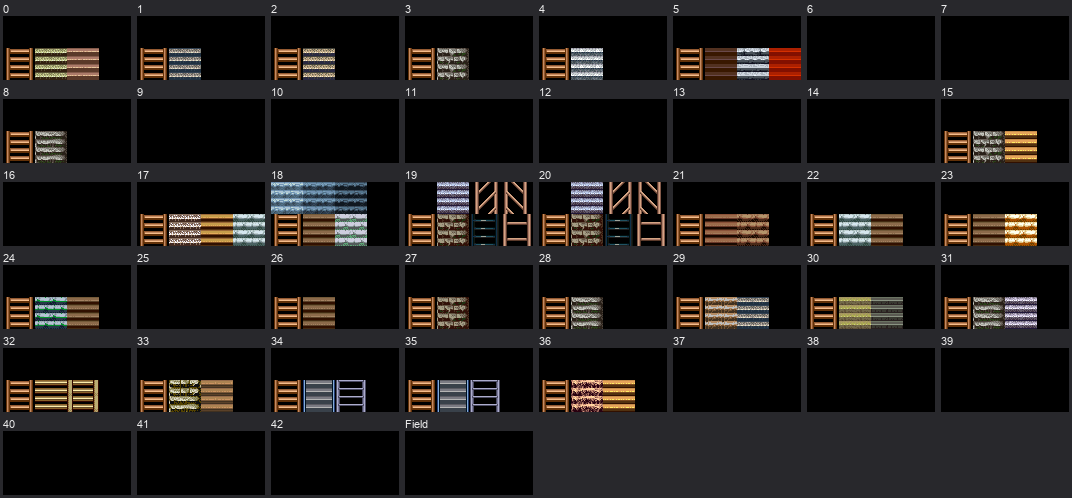
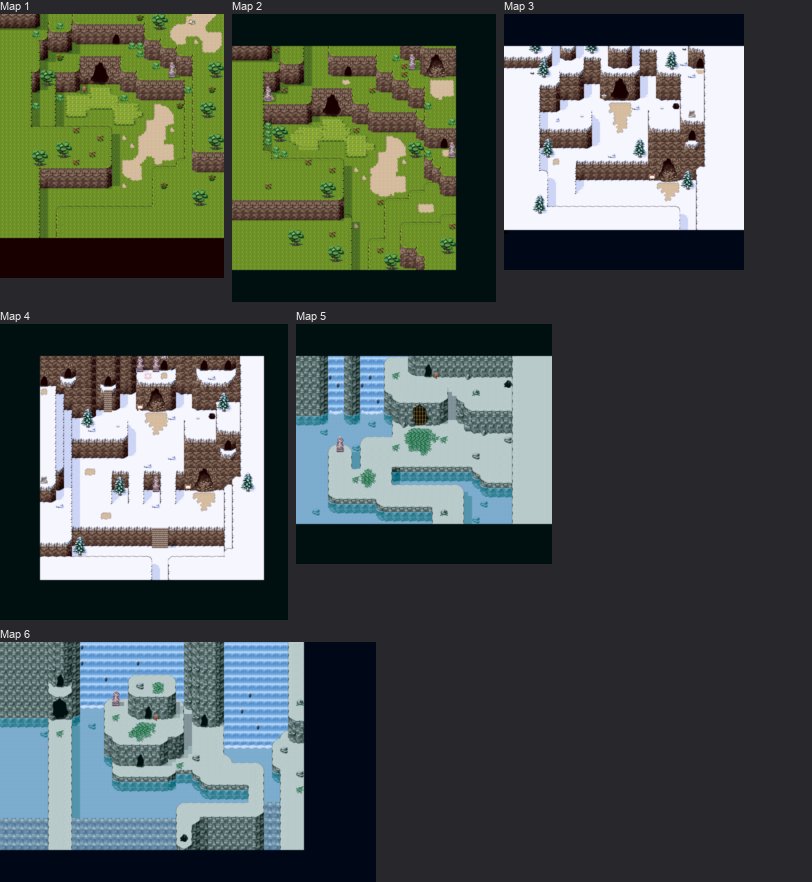
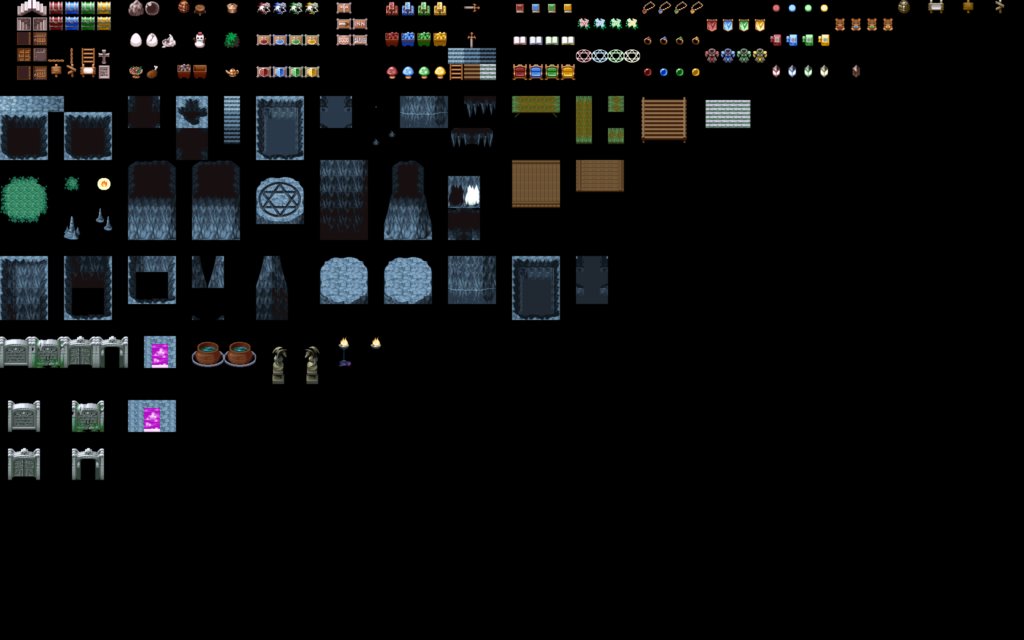
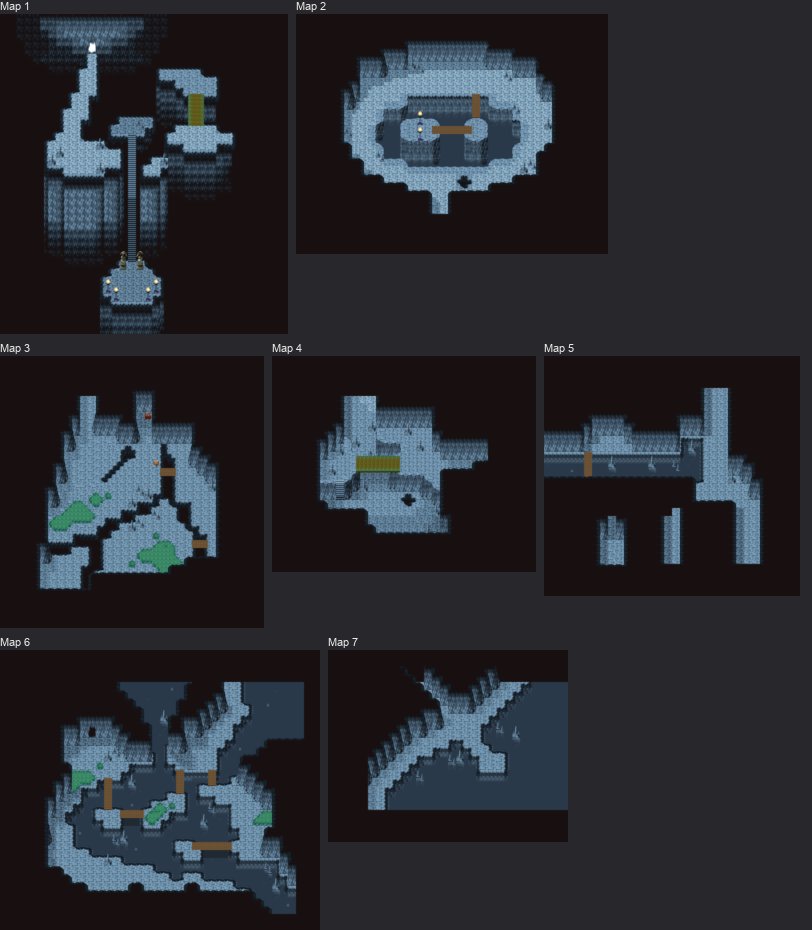
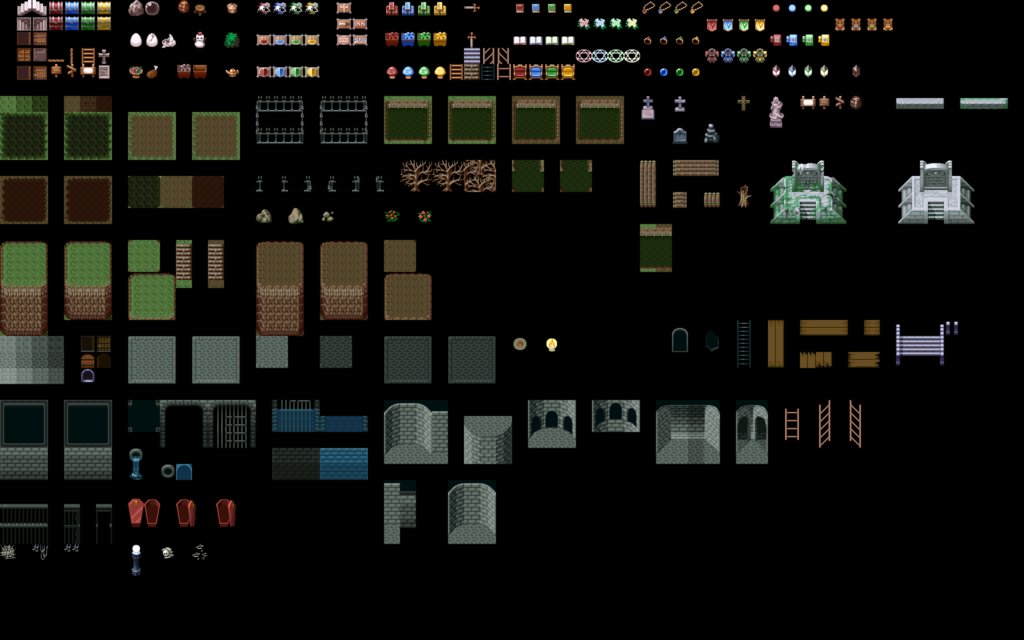
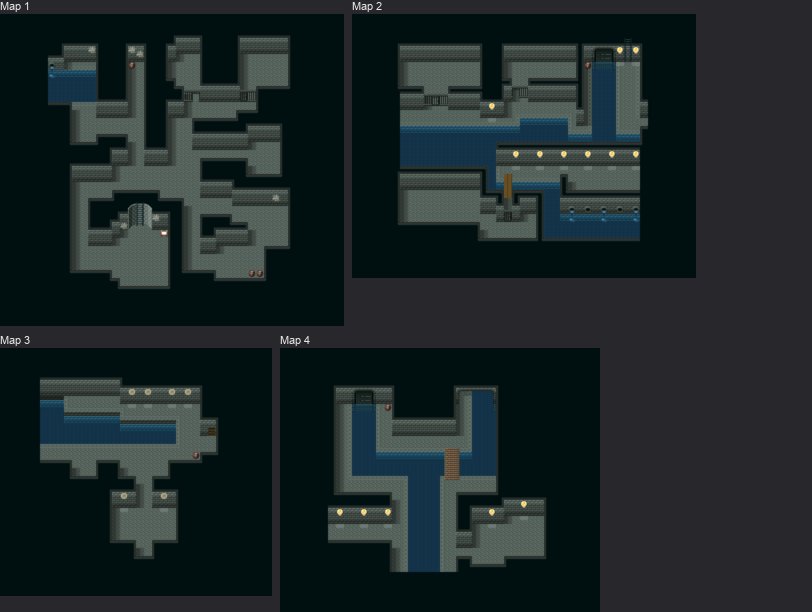
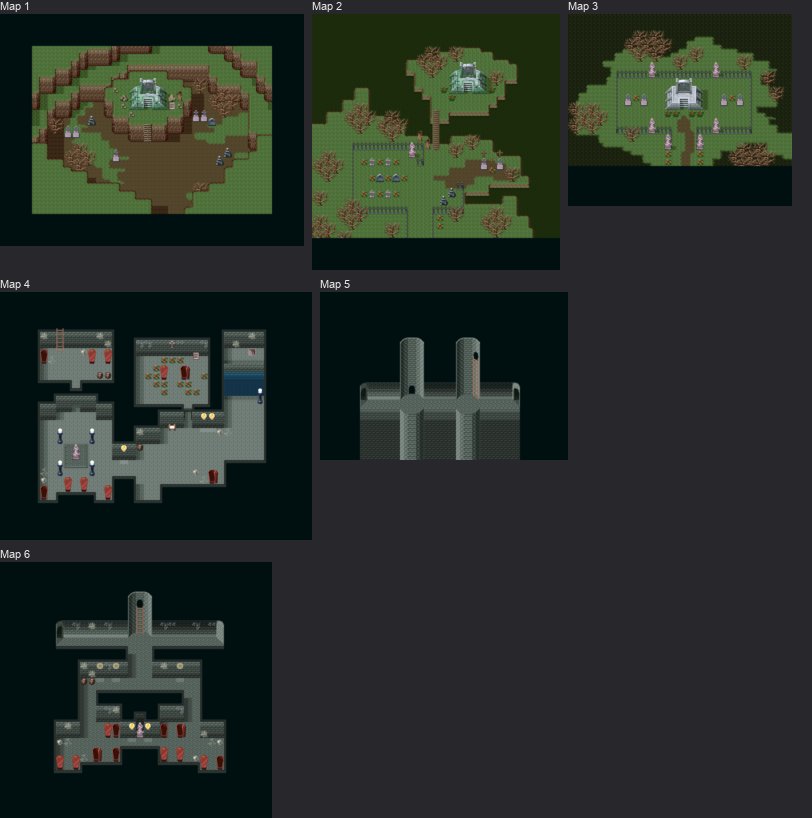
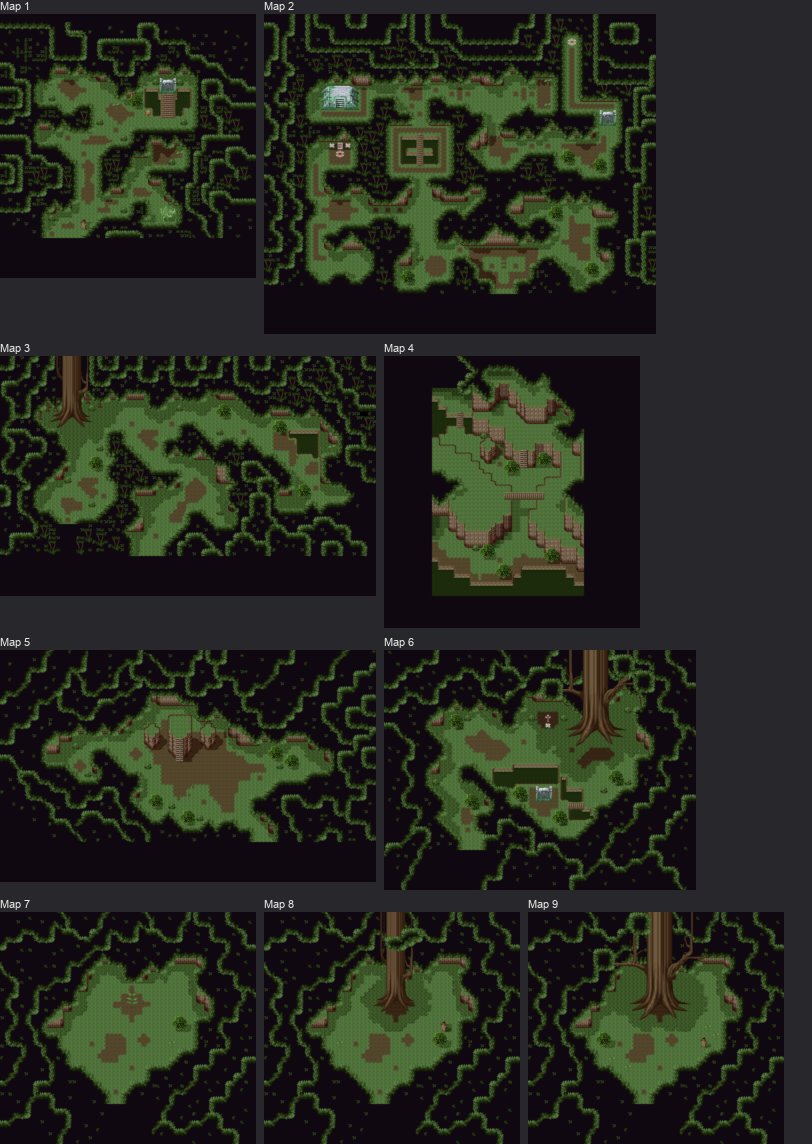
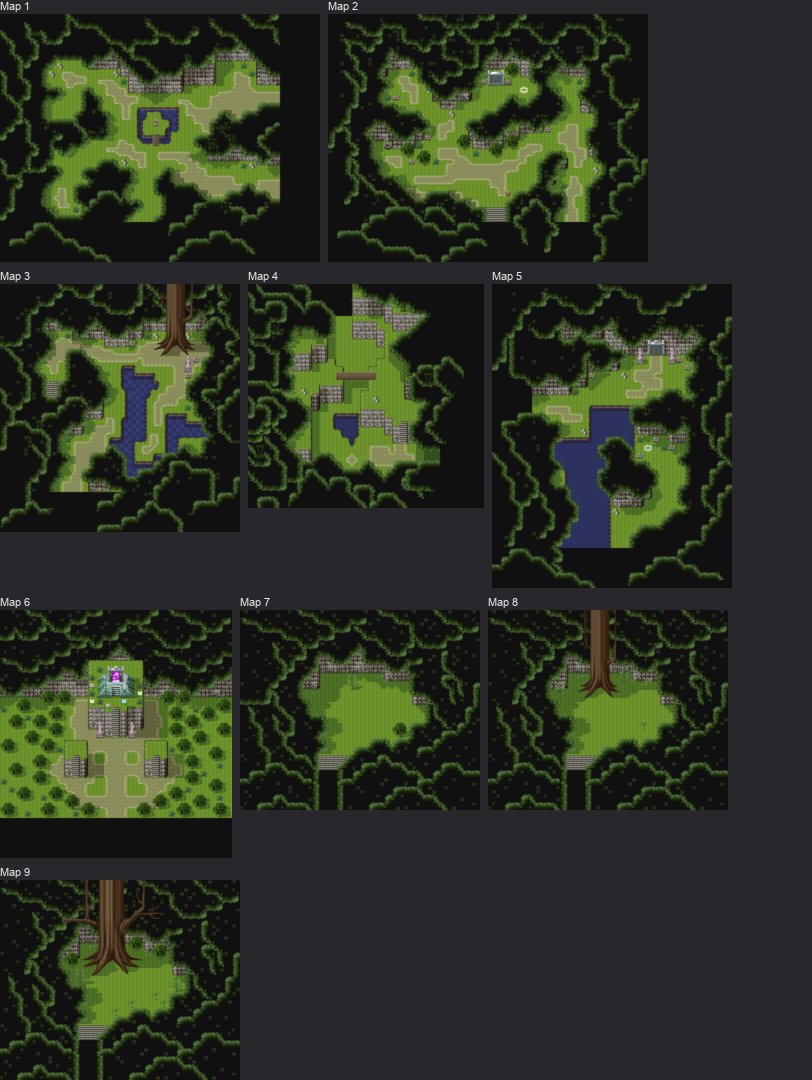
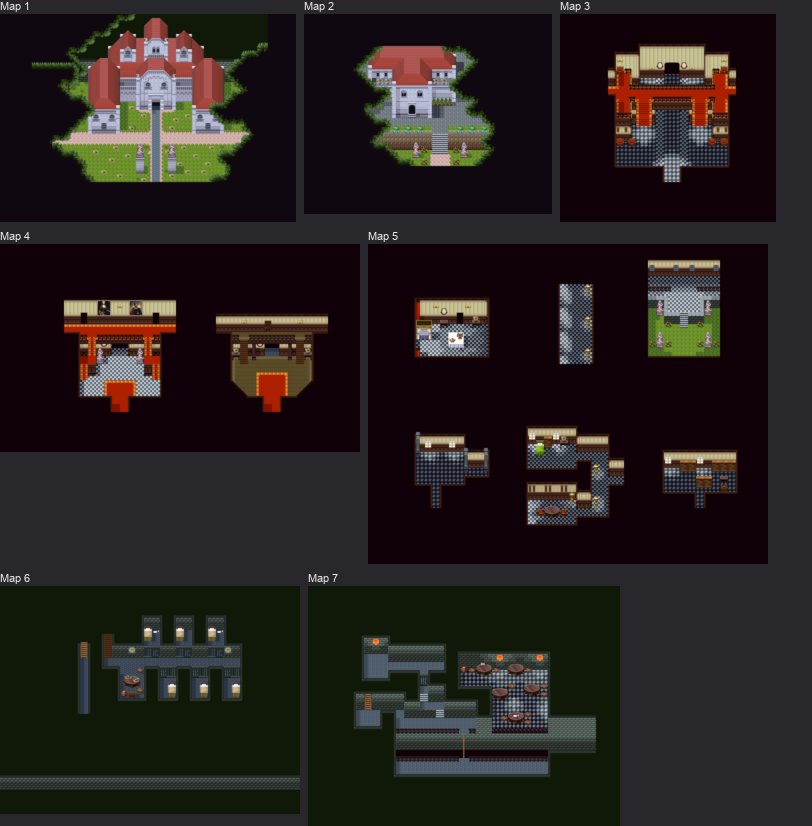
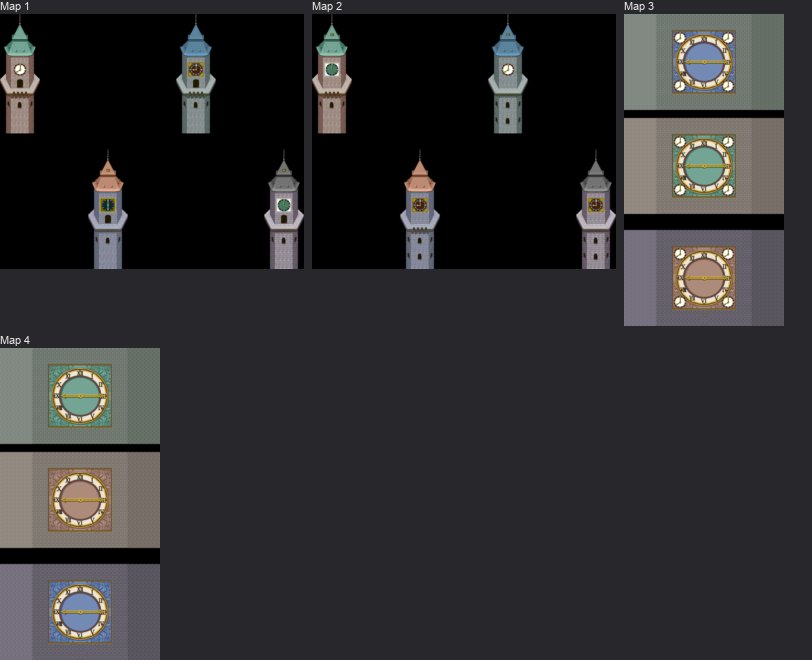
A dungeon map (any map but the field) is drawn with the parts of one map set. There are 43 sets, and each comes with default maps: ready-made maps from the disc, 273 in all, that a game uses as they are. This page shows every set's parts screen and its default maps, drawn from the game's own files by the project's tools, and ends with the field set, which field maps use.
How to choose a set, draw with its parts and place a default map is in The map editor.
Reading the sheets#
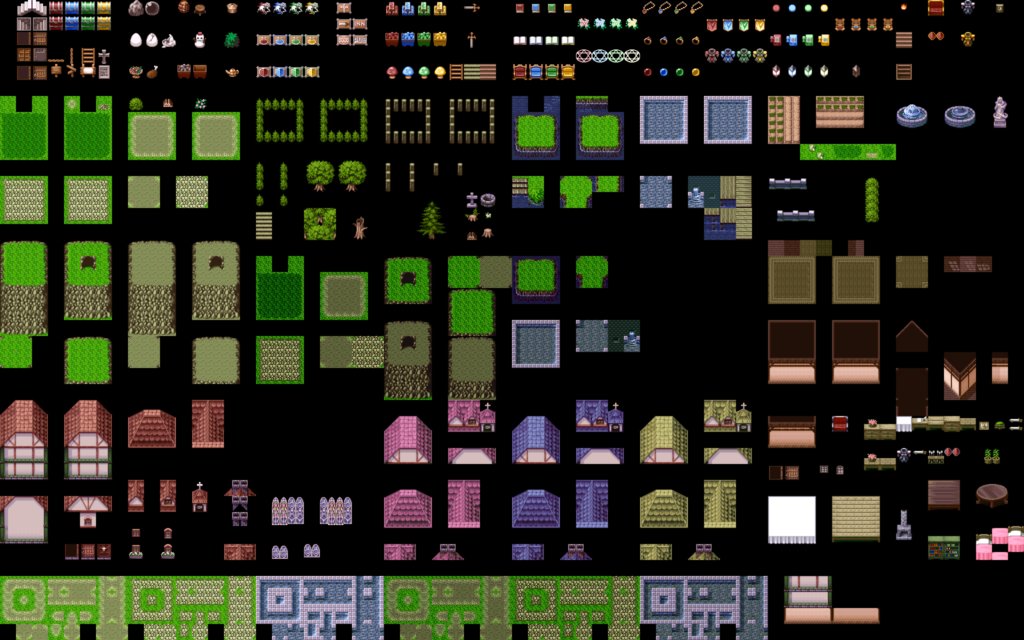
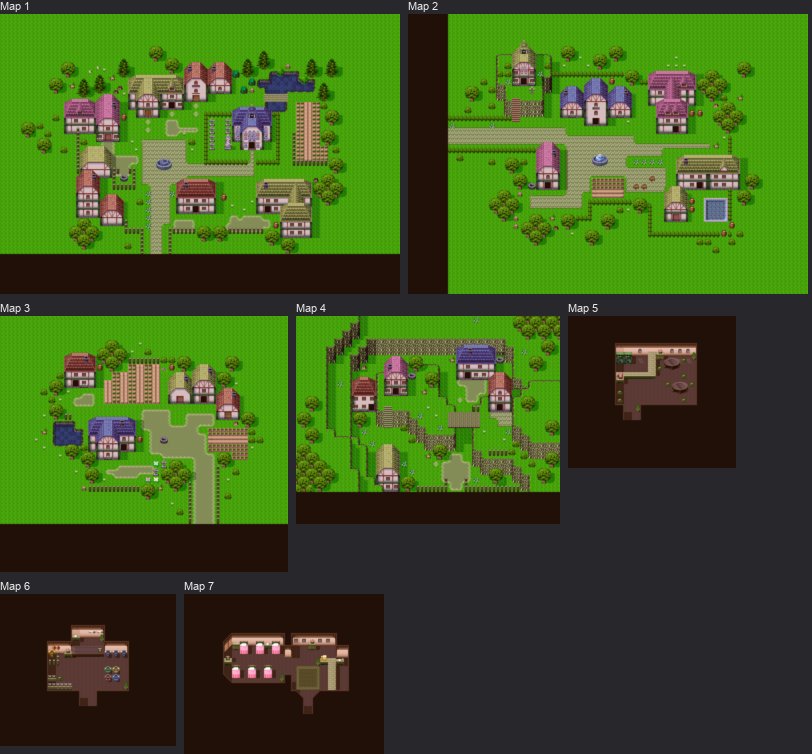
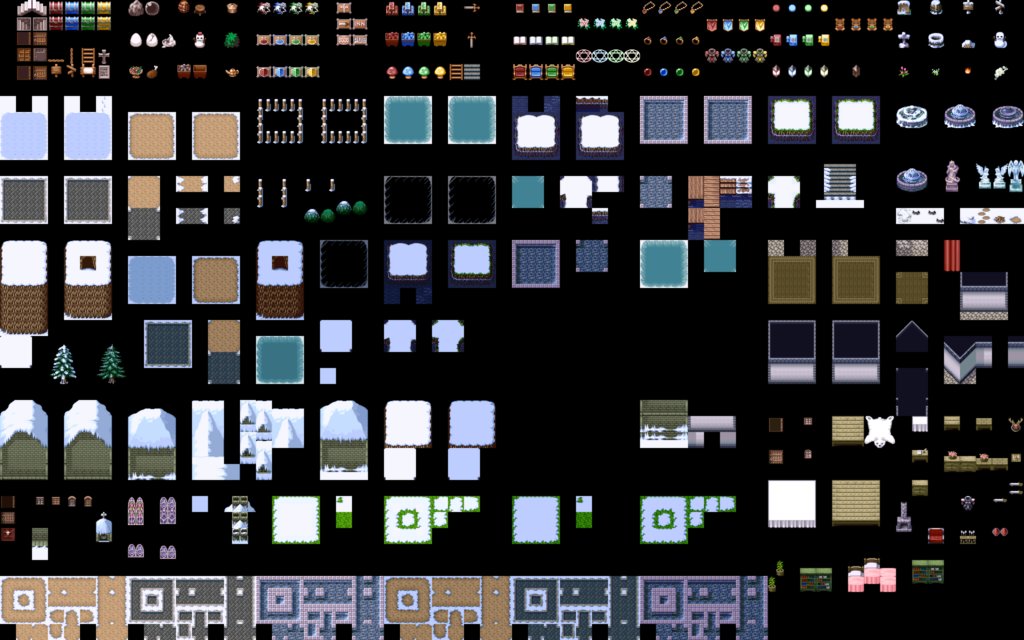
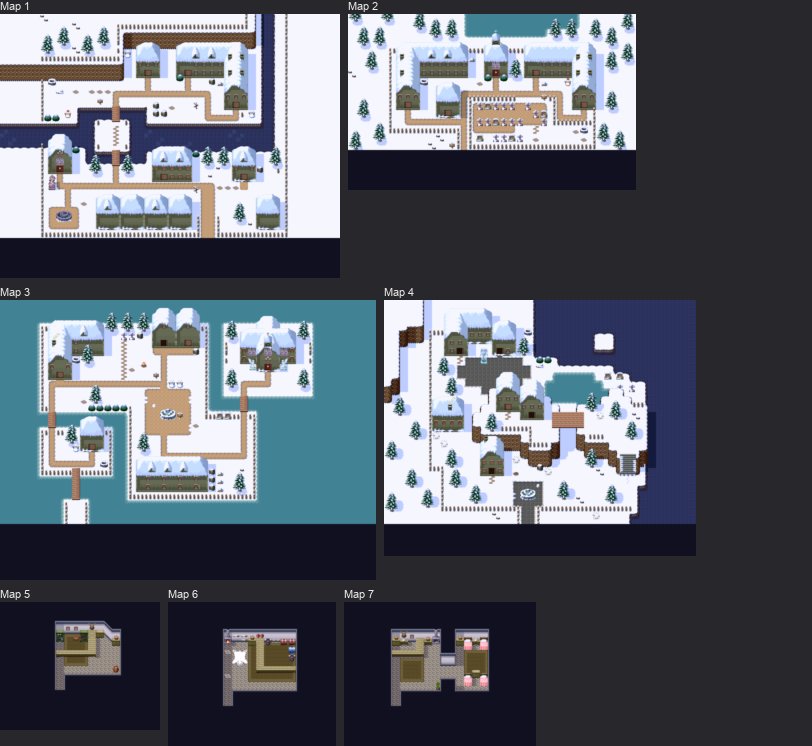
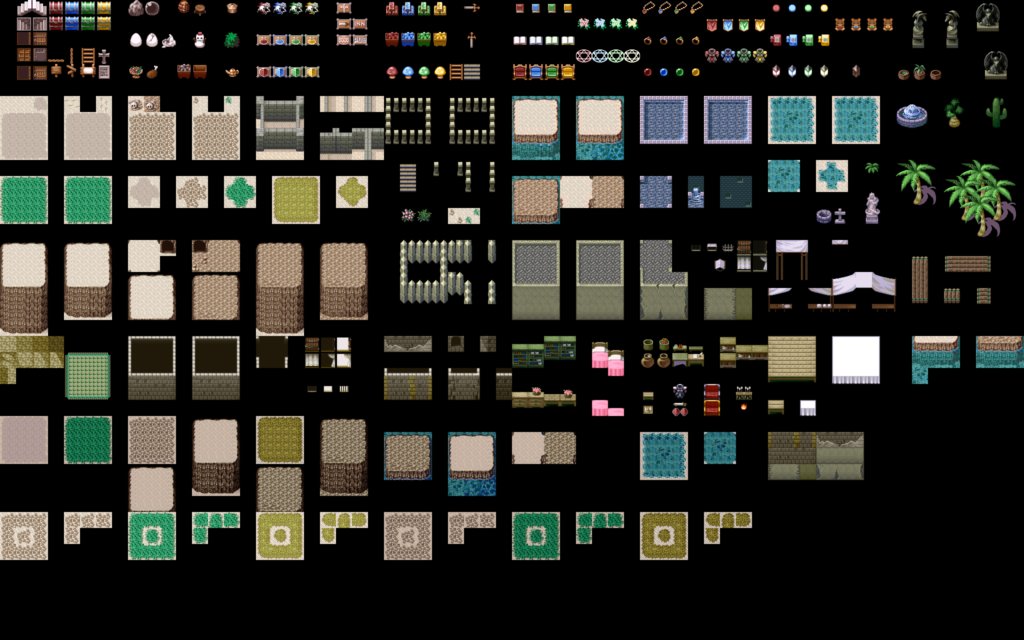
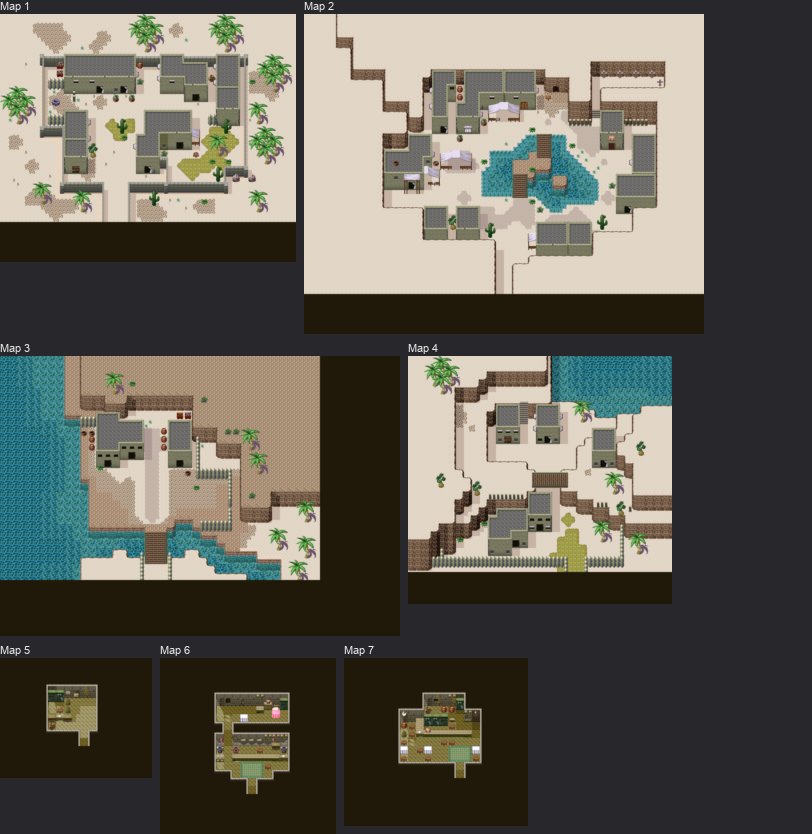
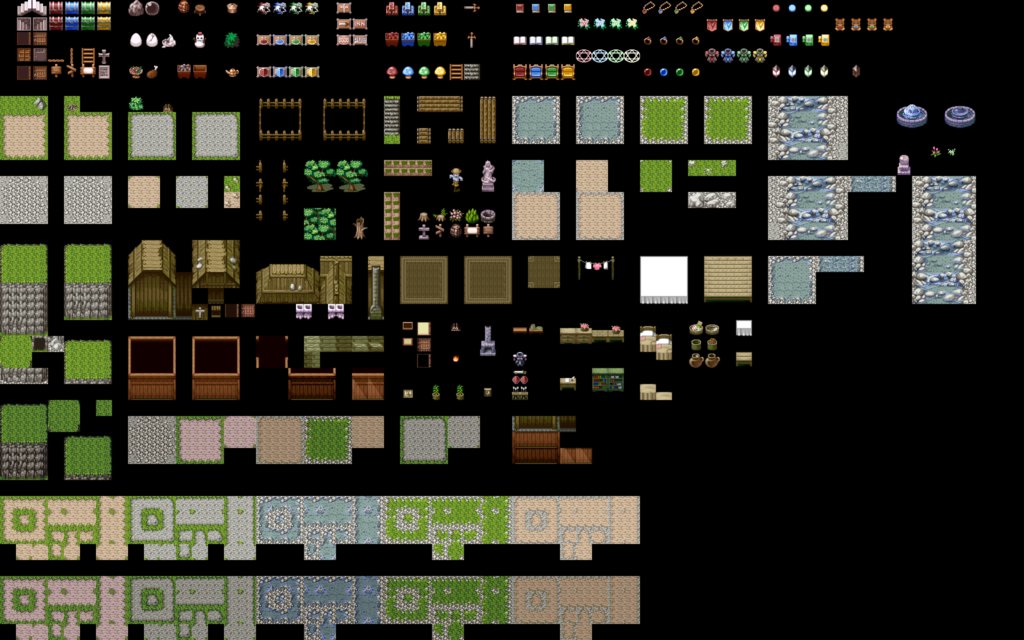
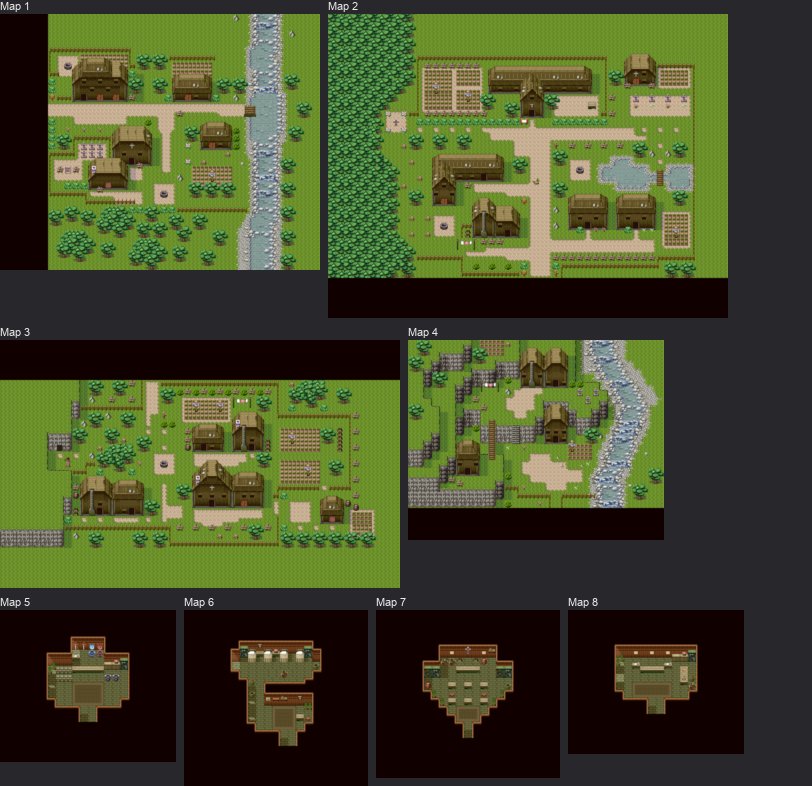
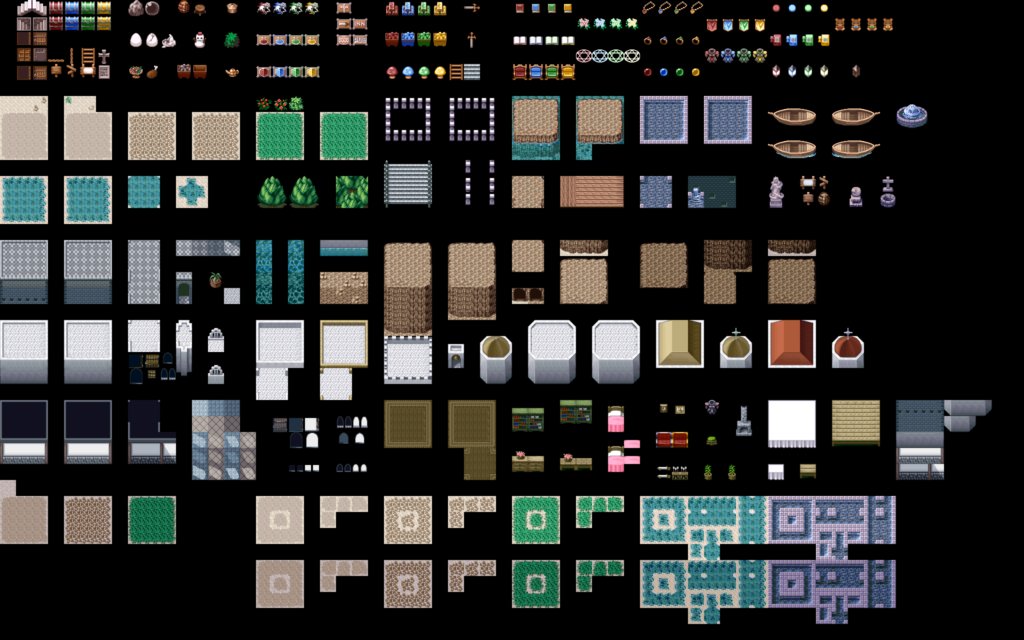
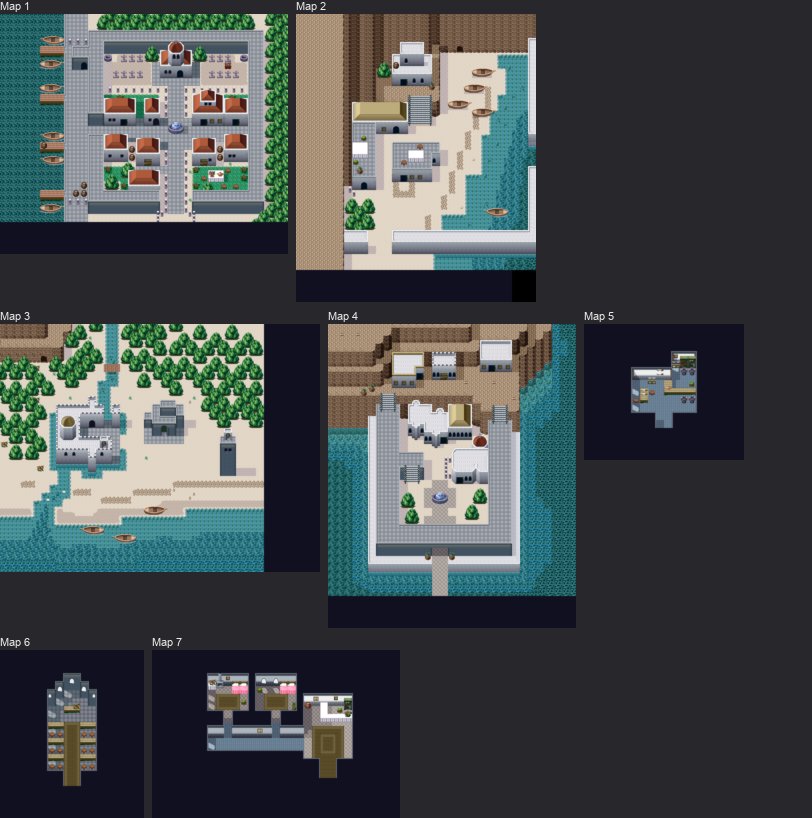
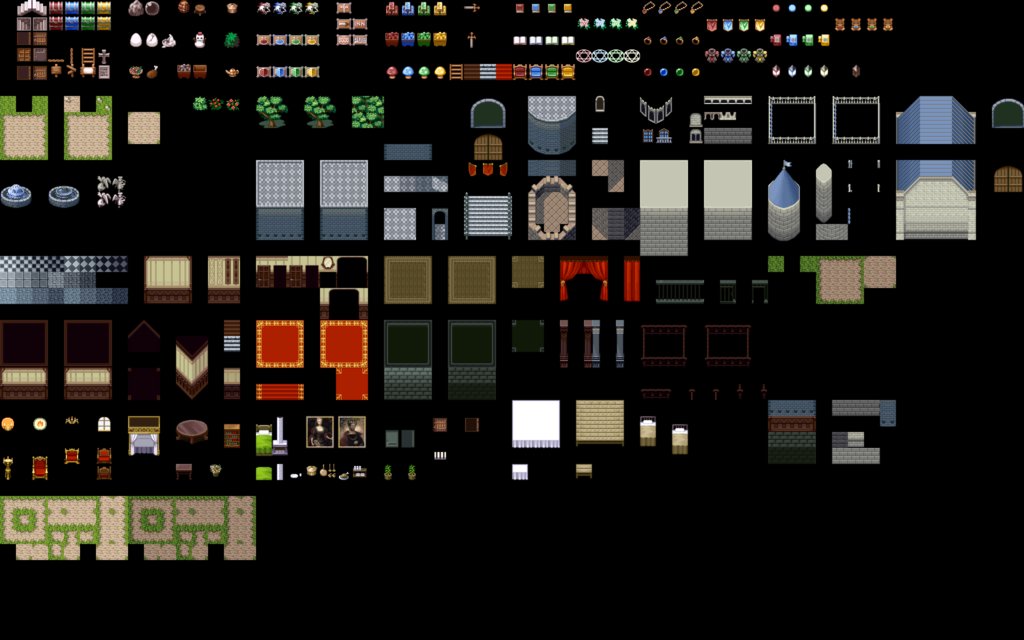
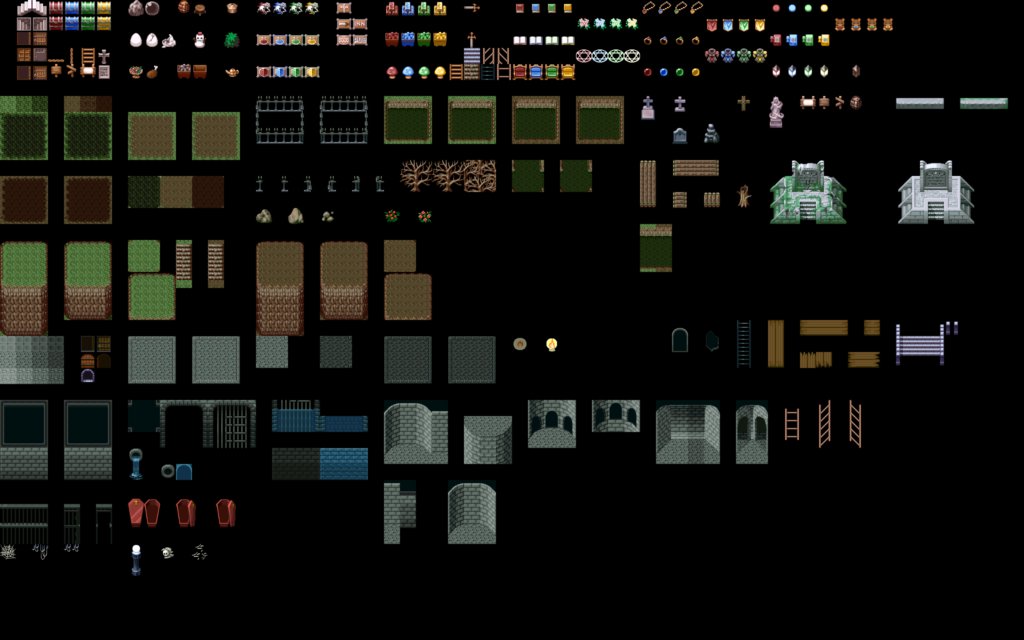
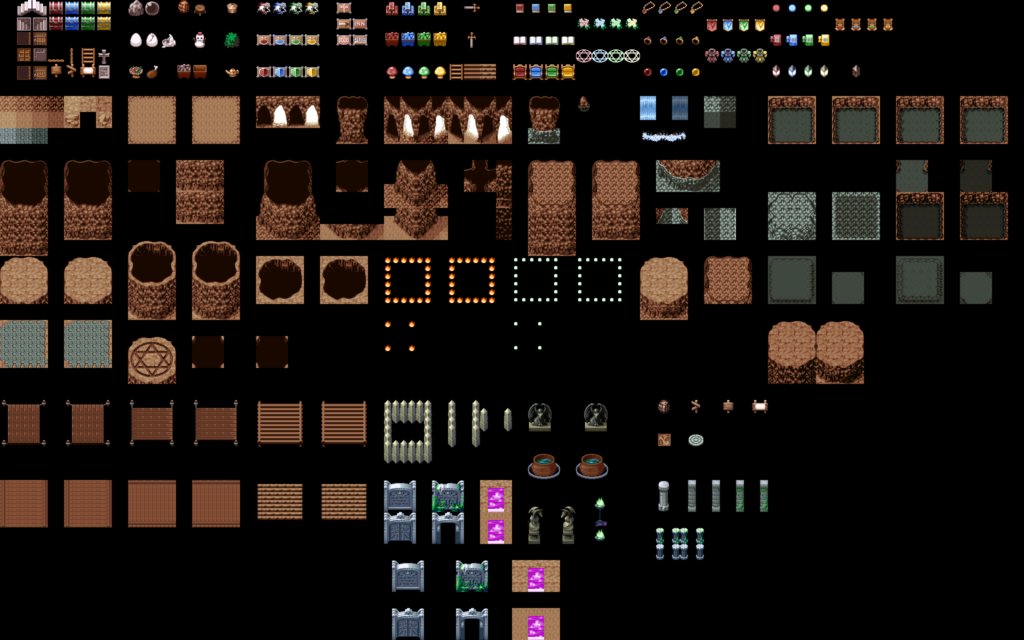
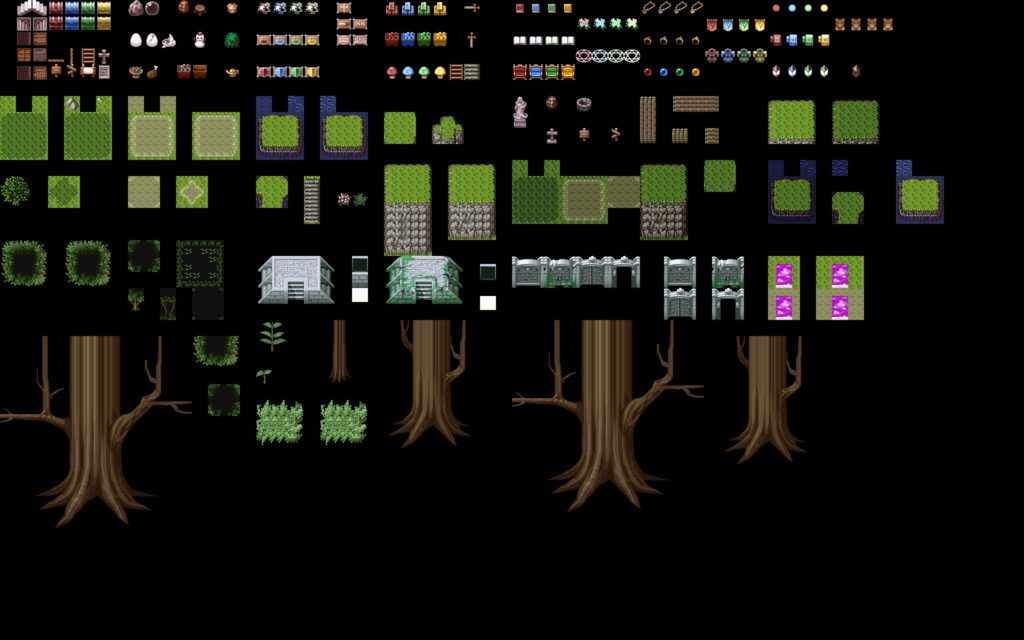
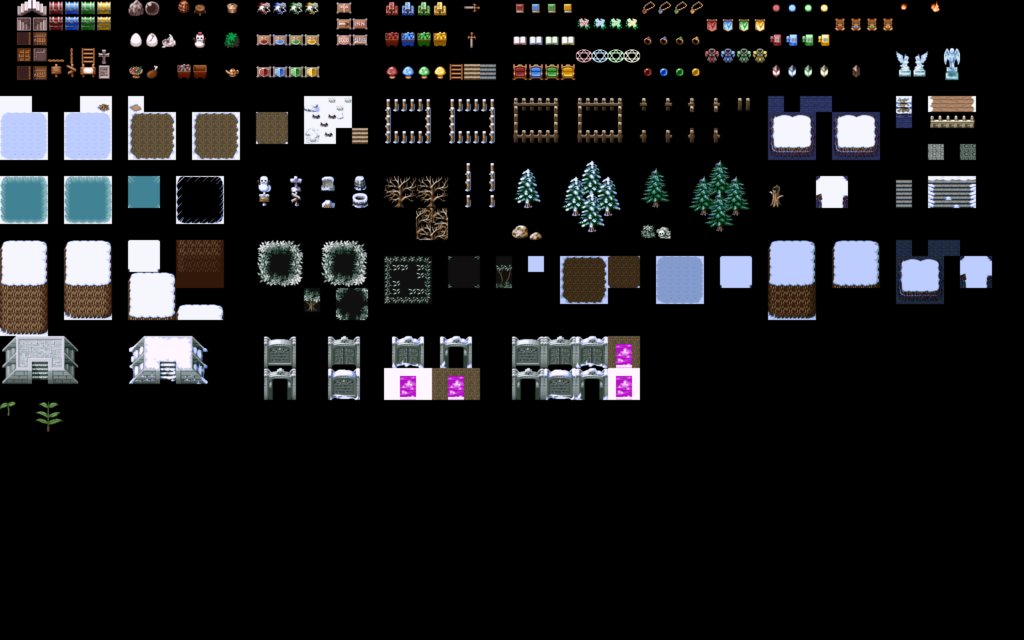
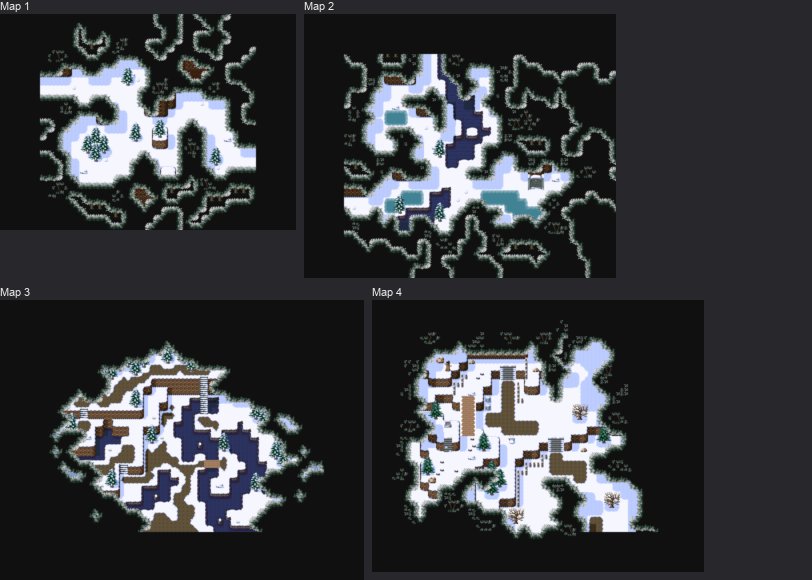
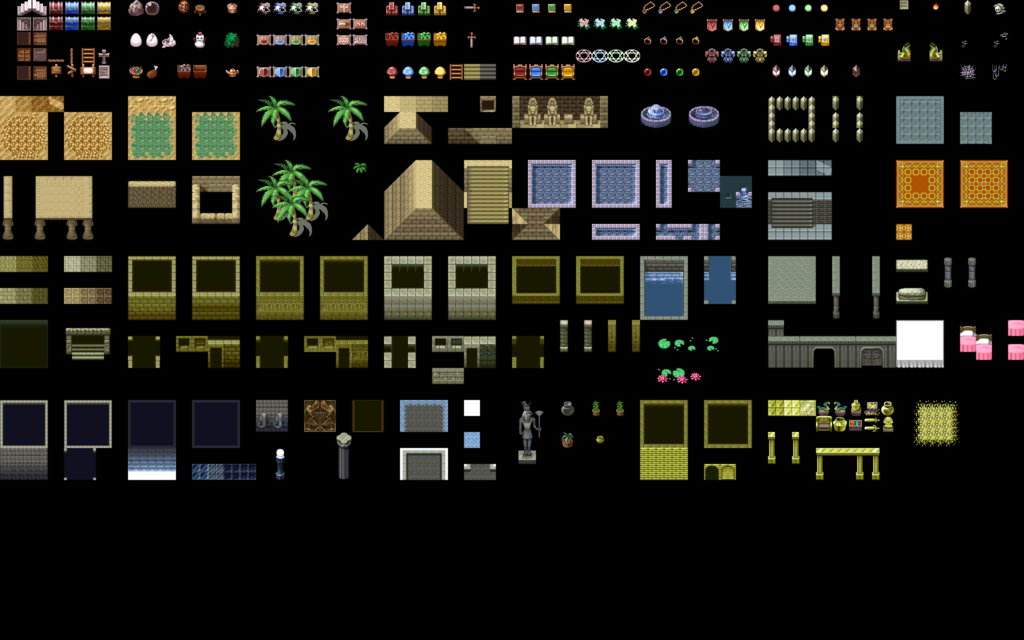
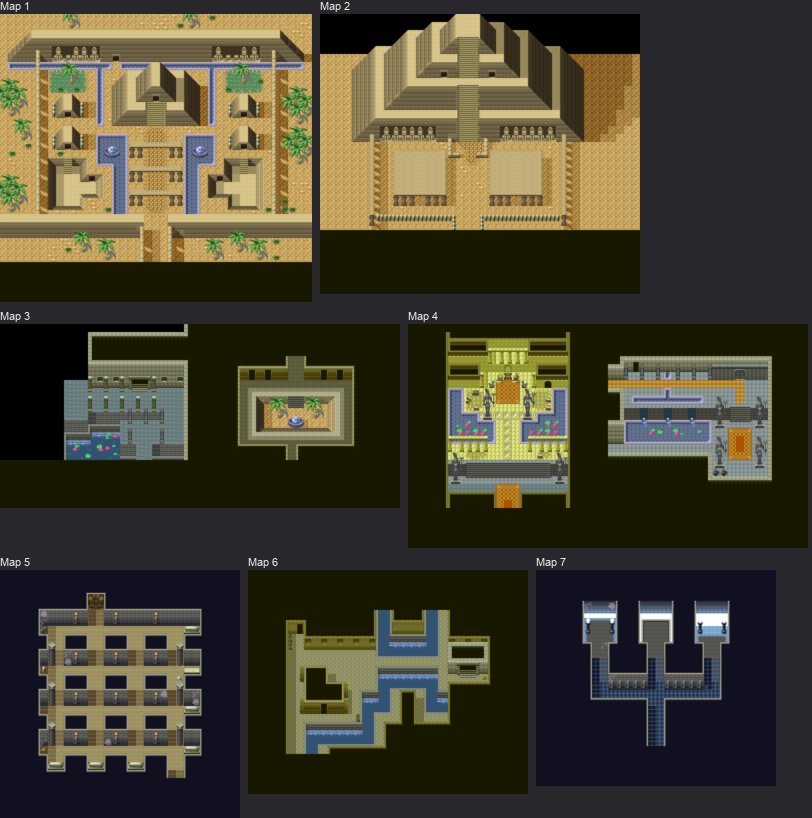
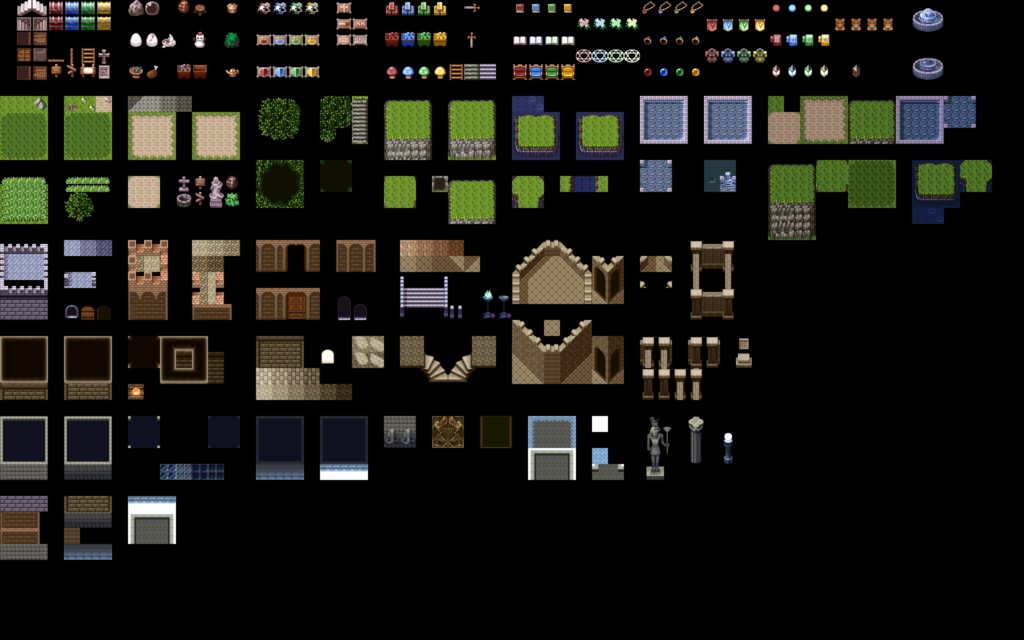
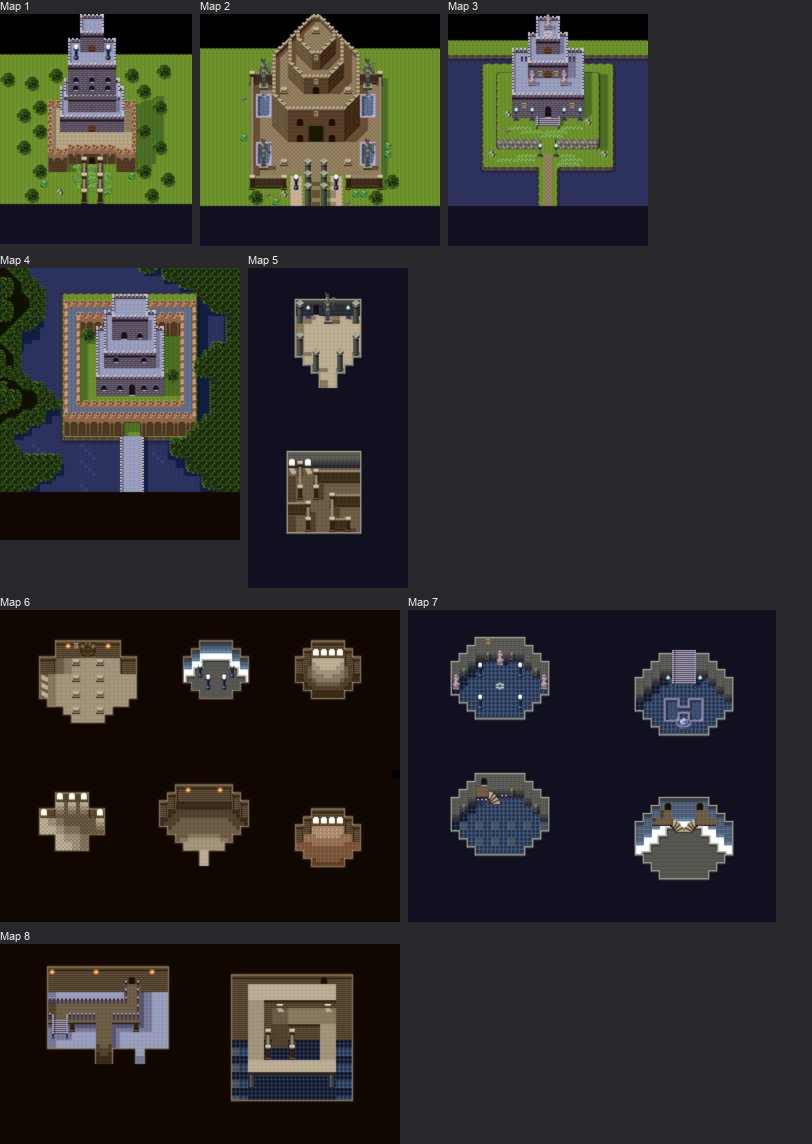
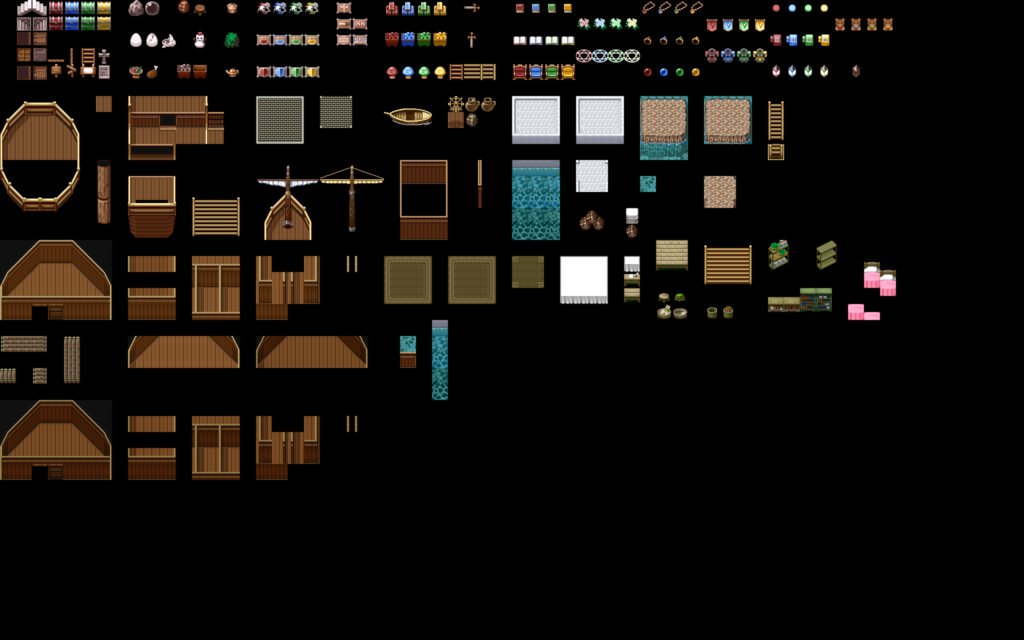
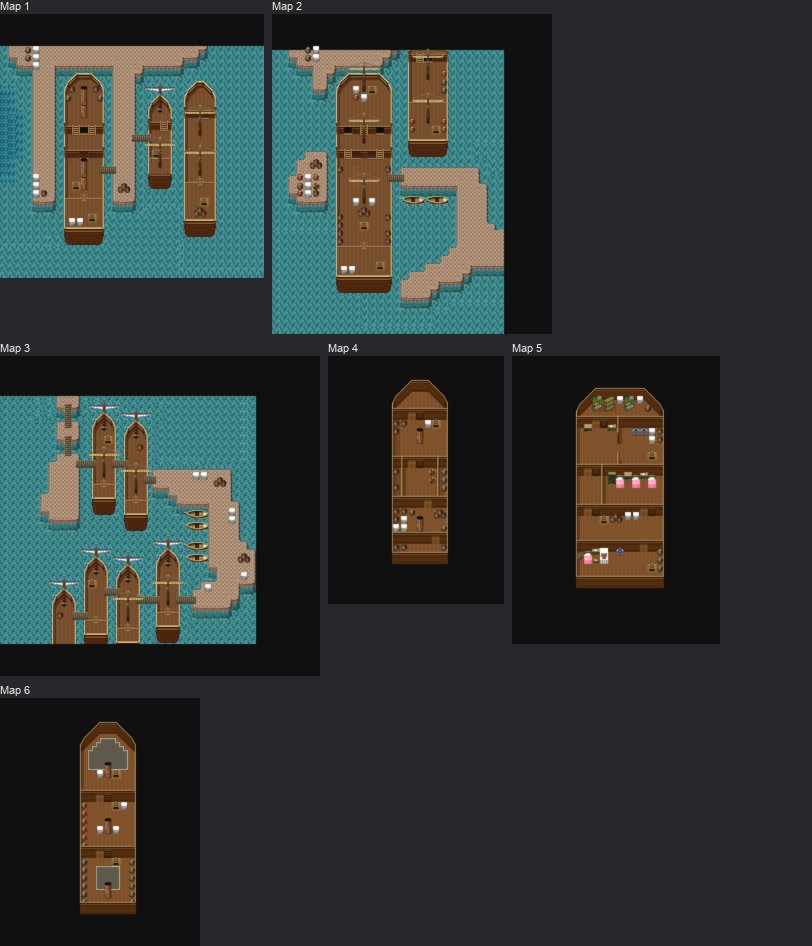
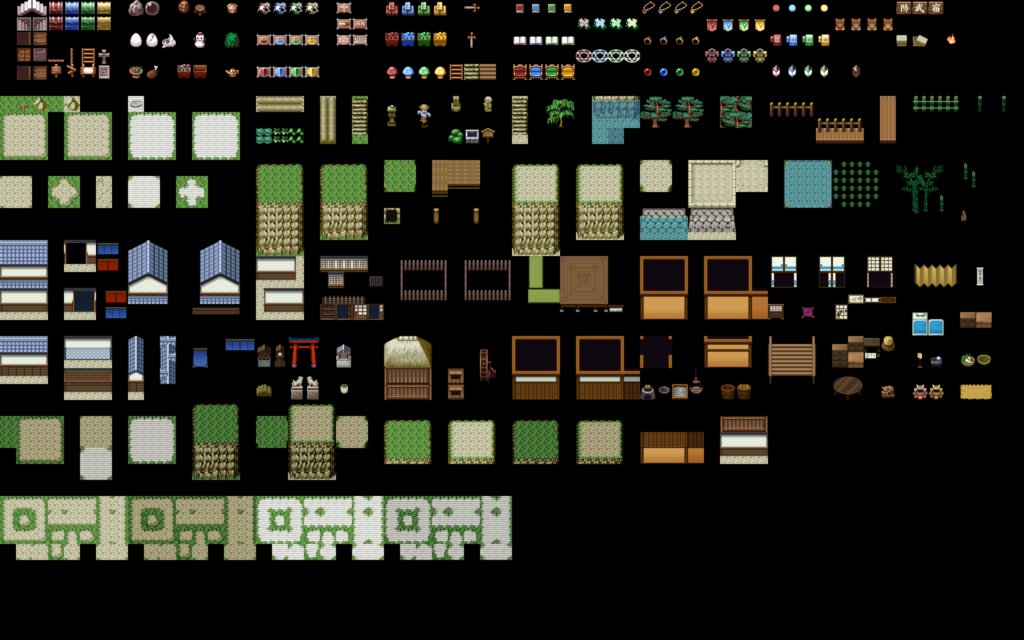
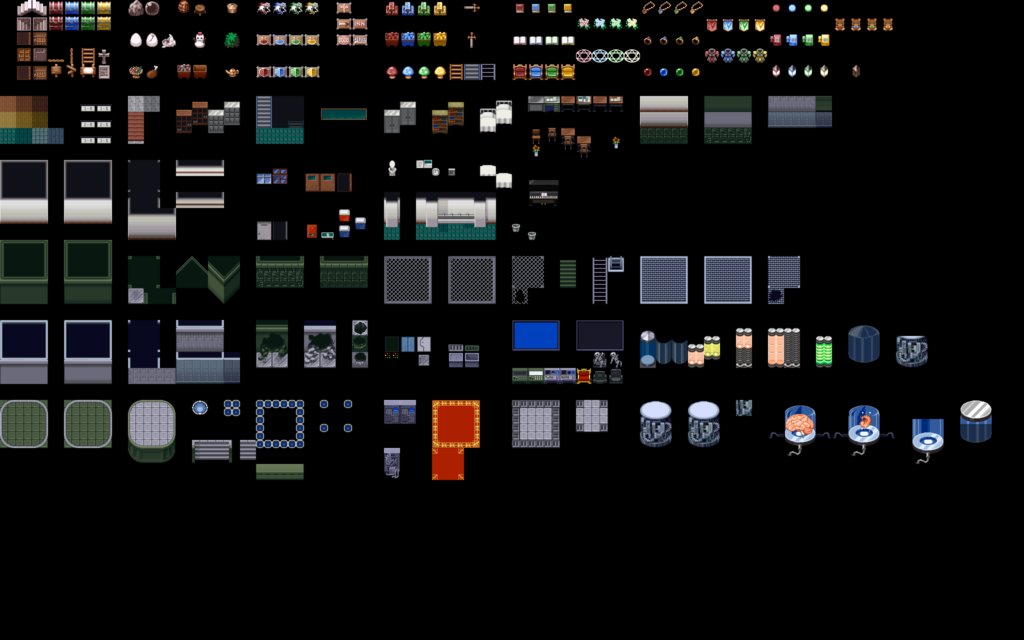
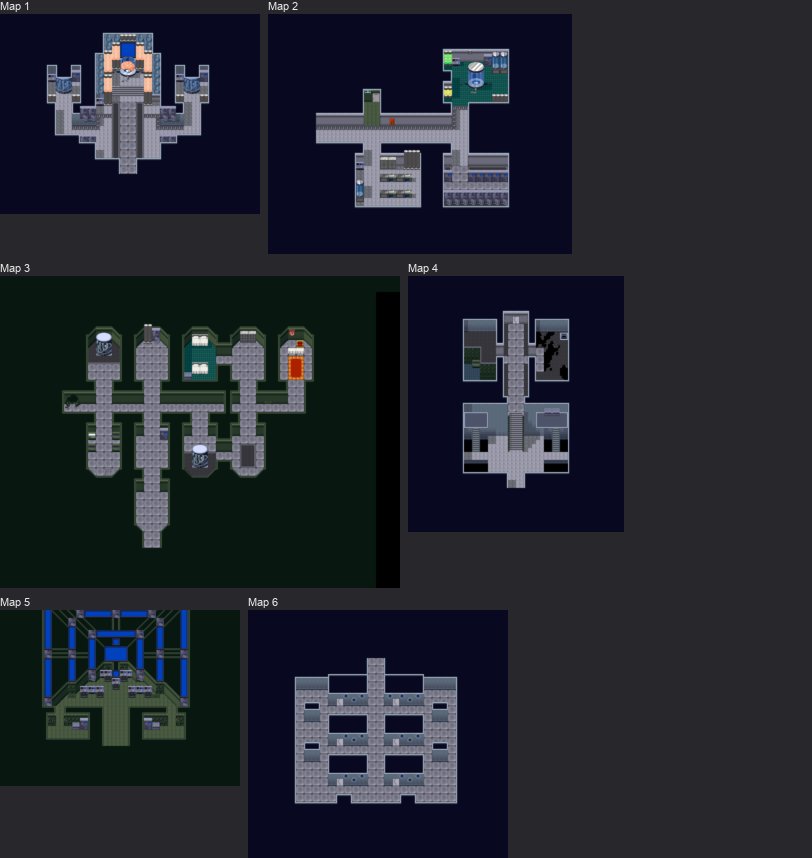
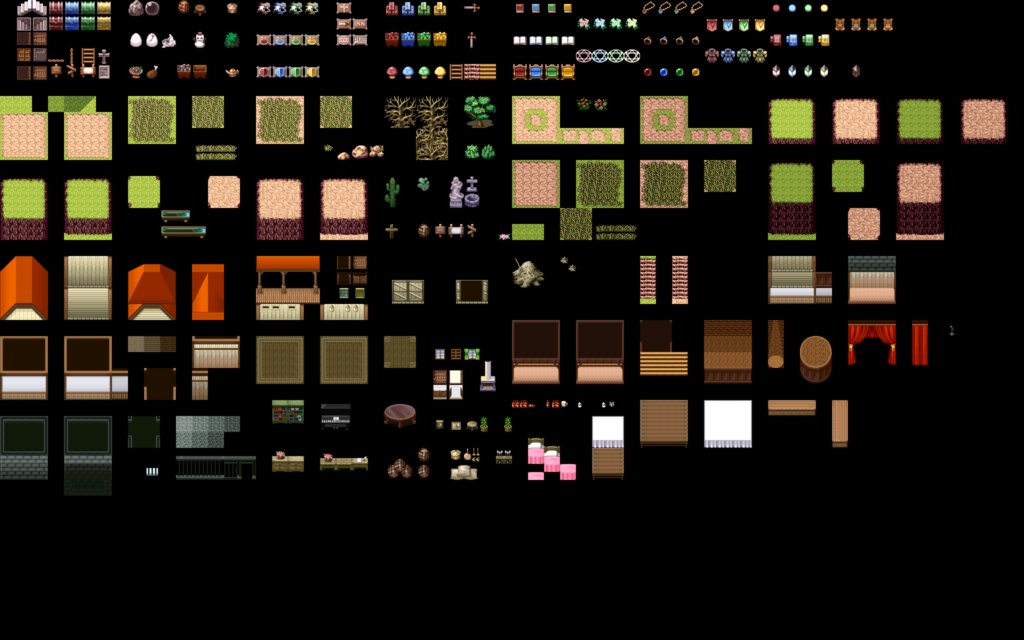
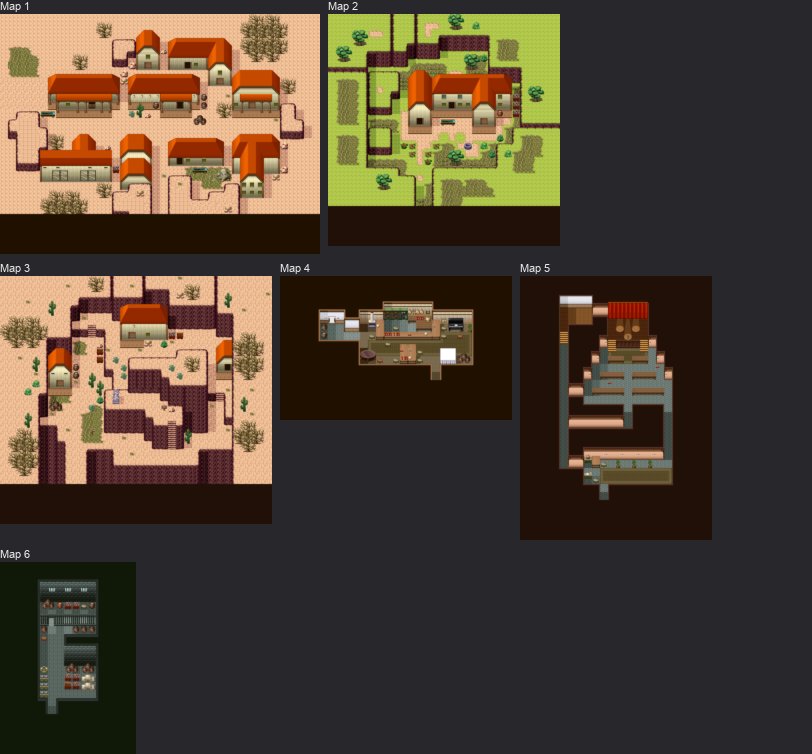
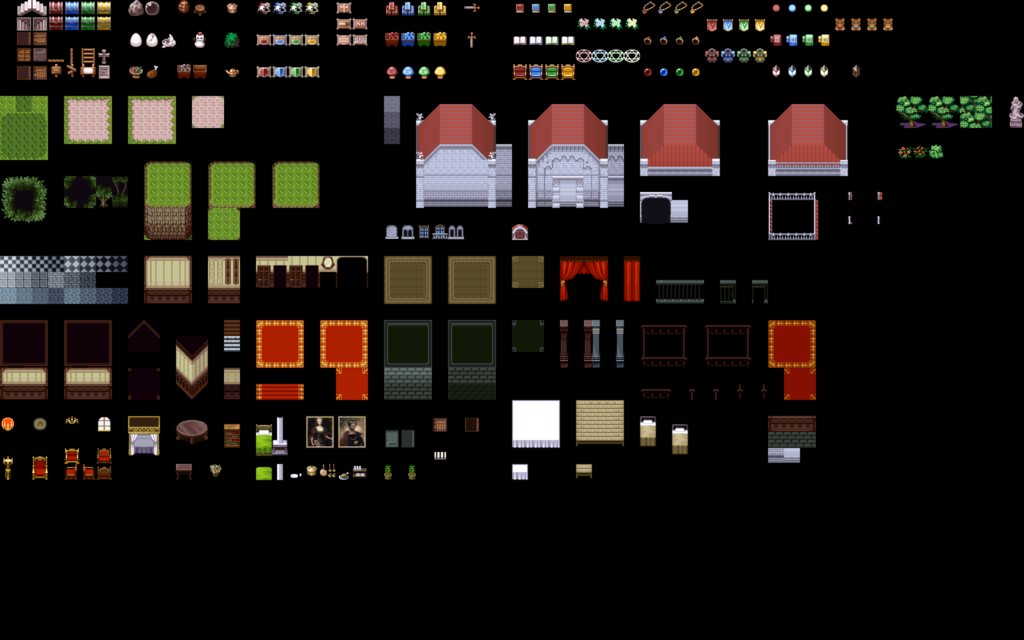
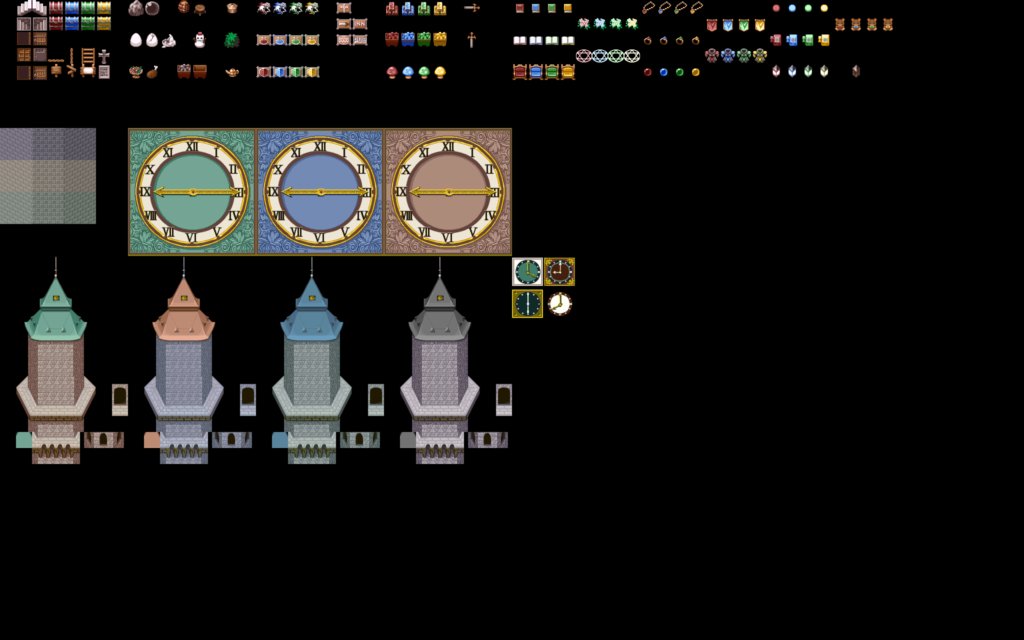
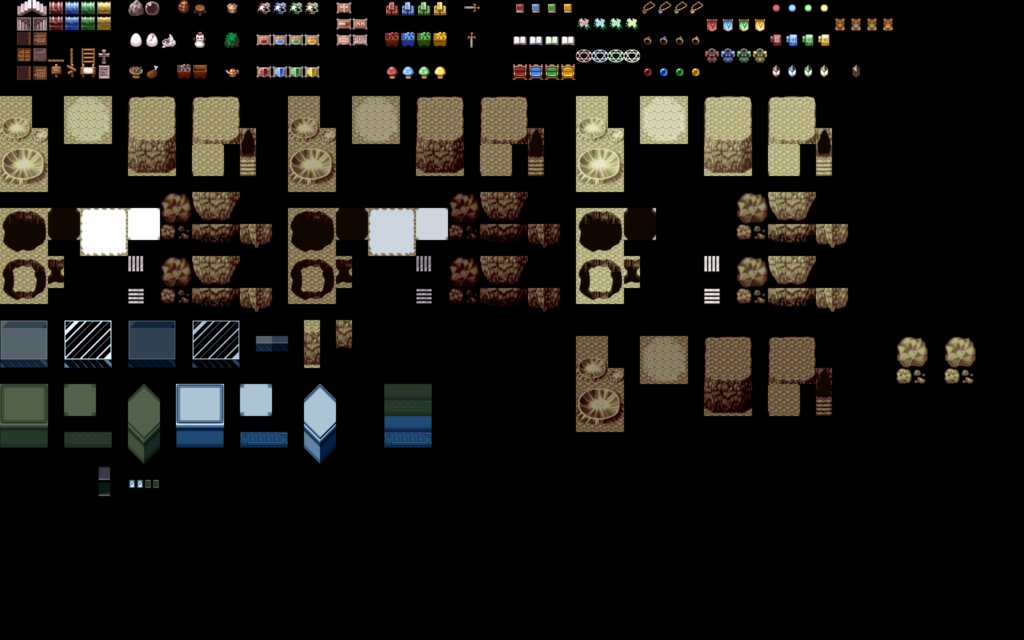
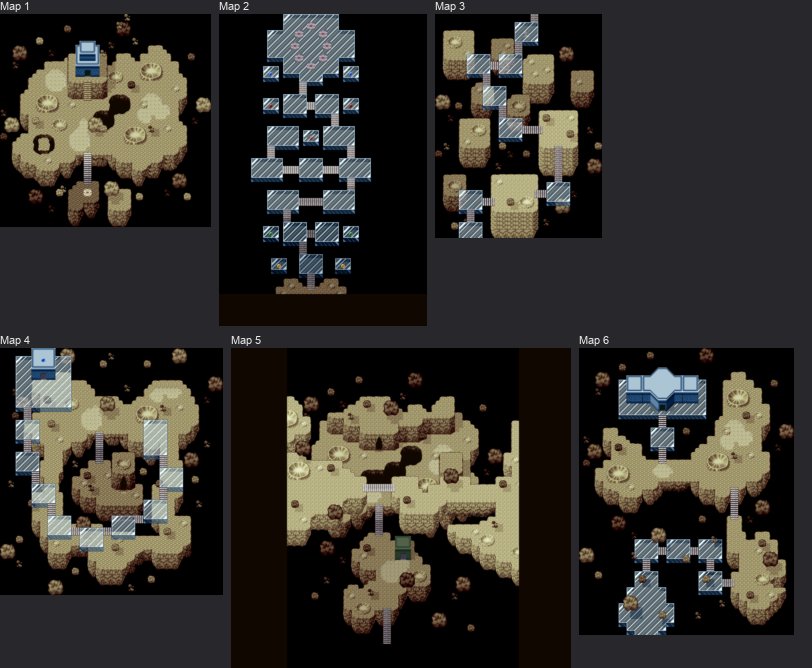
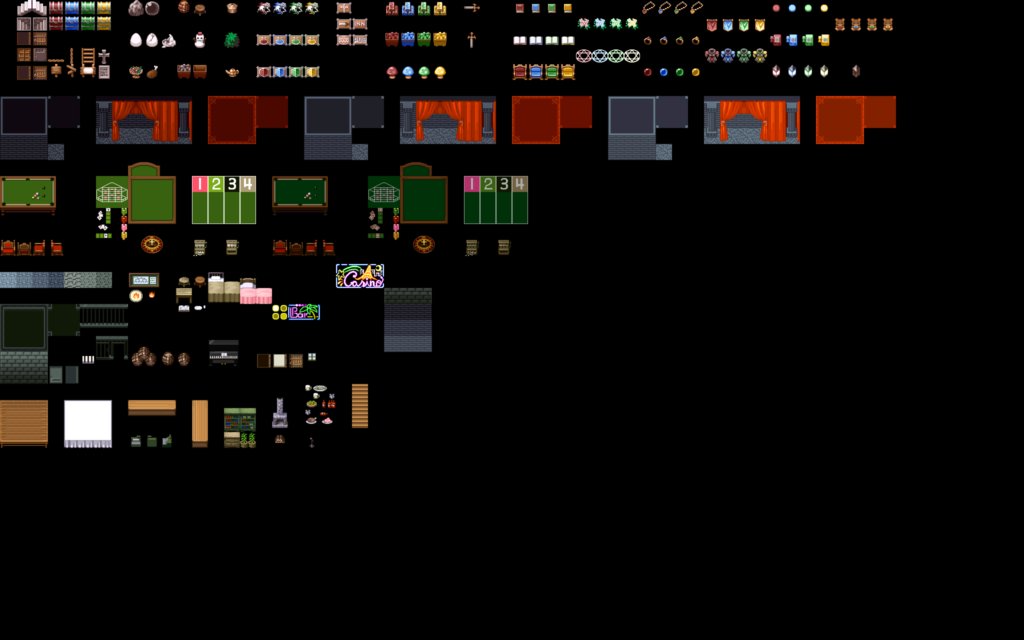
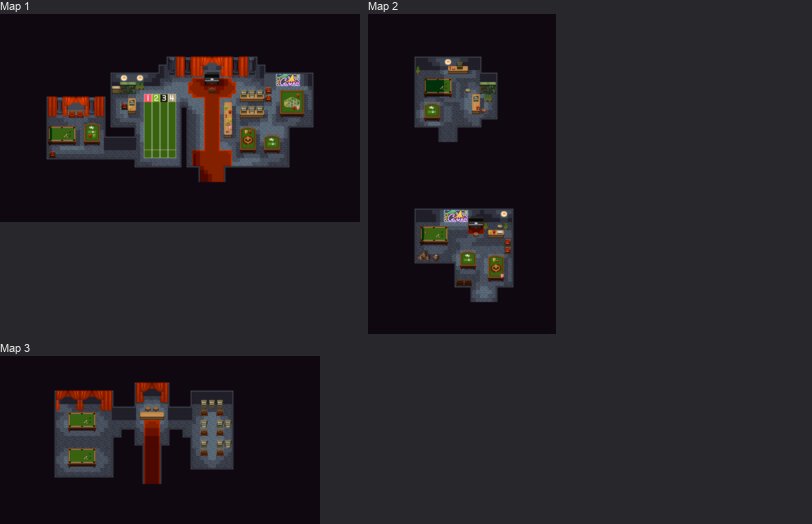
Each set below has two pictures: its parts sheet, the set's parts screen (SELECT in the map editor) at half size, and its default maps, at a quarter of their size, with both layers and without events. The dark ground round some of the smaller rooms is part of the map as drawn, not a frame. The numbers are the editor's: set 0 is the first in its list, and a set's default maps are numbered from 1. The book covers the same ground on Guidebook pp. 112–115.
Parts and their numbers#
The parts screen is a grid of 64 × 40 cells, and each cell is a part. A part's number is its column plus 64 times its row, counting both from 0: part 0276 is column 20 of row 4. The editor shows the number in the overview window (Overview, in the Options menu) as the cursor moves over the parts screen.
The common rows#
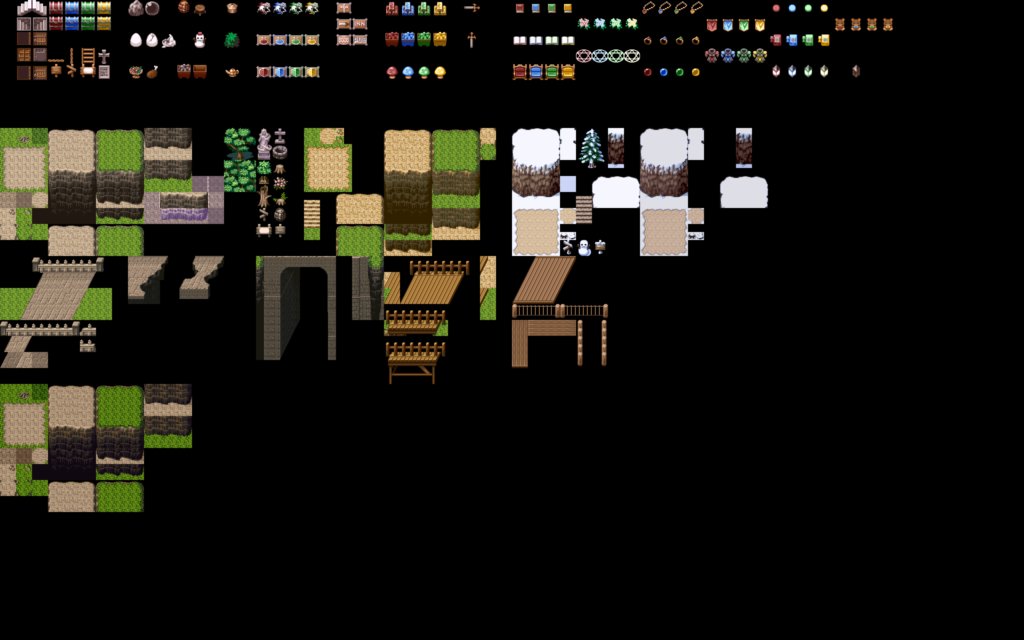
The top five rows, columns 0–55, are the same in every set: chests, pots, barrels, ladders, signs, crystals and the like. So a chest or a shop sign looks the same in a castle as in a cave. The set's own parts fill the rest of the screen.

One block in them changes from set to set: the 4 × 2 cells at columns 28–31 of rows 3 and 4. It holds a ladder and steps drawn to match the set's floors, and in some sets it is empty.
The invisible parts#
Three cells of the common rows look empty but aren't: parts 0276, 0277 and 0278 (row 4, columns 20–22, framed in light blue above). Every set has them, the field set included. Each draws nothing and still has its effect on walking:
| Part | Kind | Does |
|---|---|---|
| 0276 | Base | An invisible wall: nobody can walk onto the cell |
| 0277 | Base | An invisible floor: the cell can be walked |
| 0278 | Overlay | An invisible layer switch: walking over it moves a walker to the other layer, like a stair. On a field map it is invisible sea instead |
The first two are base parts, so drawing one clears what that layer had in the cell; 0278 is an overlay part and leaves the floor under it. The book lists the same three (Guidebook p. 47).
The red and blue frames#
On the parts screen the editor draws a frame round each of its larger parts, and the frame's colour says how the part is drawn. A part in a red frame (a house or a tree: anything up to 4 × 4 cells) is stamped whole, at its own size. A part in a blue frame is a terrain block: 3 × 3 cells of one ground with its edges, such as grass with a sandy rim or water with a shore. It is drawn as a rectangle of any size, and its edges join up with the same terrain already on the map. The sheets on this page don't show the frames. The map editor explains both tools.
The sets#
| No. | Map set | Default maps | No. | Map set | Default maps |
|---|---|---|---|---|---|
| 0 | Town | 7 | 22 | Rock Cave | 6 |
| 1 | Snow Town | 7 | 23 | Fire Cave | 6 |
| 2 | Desert Town | 7 | 24 | Ice Cave | 7 |
| 3 | Village | 8 | 25 | Dragon Cave | 8 |
| 4 | Port Town | 7 | 26 | Treasure Cave | 6 |
| 5 | Castle | 8 | 27 | Dark Forest | 9 |
| 6 | Arena | 4 | 28 | Bright Forest | 9 |
| 7 | Forest Town | 7 | 29 | Snow Forest | 4 |
| 8 | Ruins | 7 | 30 | Pyramid | 7 |
| 9 | Mushrooms | 7 | 31 | Tower | 8 |
| 10 | Candy | 8 | 32 | Ship | 6 |
| 11 | Above the Clouds | 6 | 33 | Edo | 7 |
| 12 | Tribal Village | 7 | 34 | School | 6 |
| 13 | Church | 6 | 35 | Sci-Fi | 6 |
| 14 | Wooden House | 4 | 36 | Wild West | 6 |
| 15 | Theater | 4 | 37 | Mansion | 7 |
| 16 | Floating Land | 7 | 38 | Clock Tower | 4 |
| 17 | Cave Mouth | 6 | 39 | Outer Space | 6 |
| 18 | Limestone Cave | 7 | 40 | Casino | 3 |
| 19 | Sewer | 4 | 41 | Tavern | 3 |
| 20 | Graveyard | 6 | 42 | Bridge | 8 |
| 21 | Earth Cave | 7 |
0. Town#
7 default maps.
1. Snow Town#
7 default maps.
2. Desert Town#
7 default maps.
3. Village#
8 default maps.
4. Port Town#
7 default maps.
5. Castle#
8 default maps.
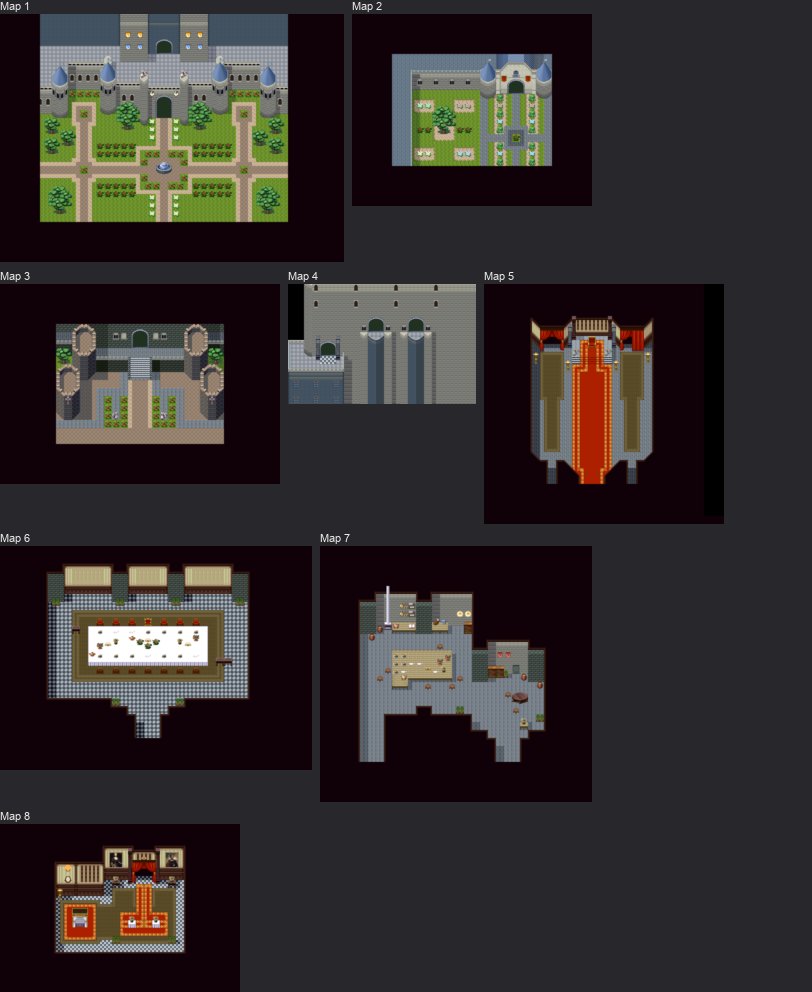
6. Arena#
4 default maps.
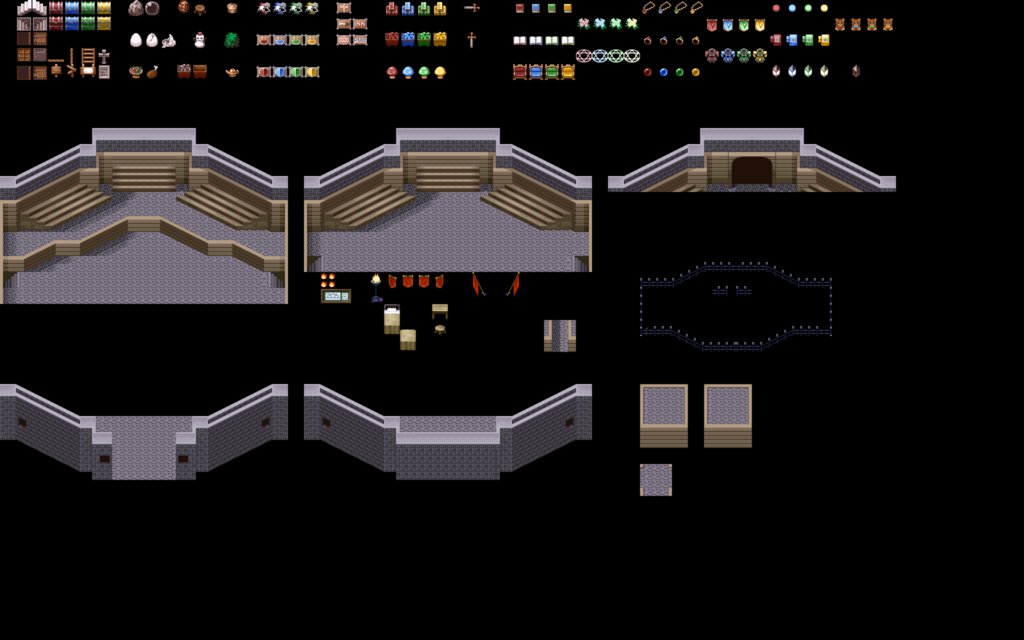
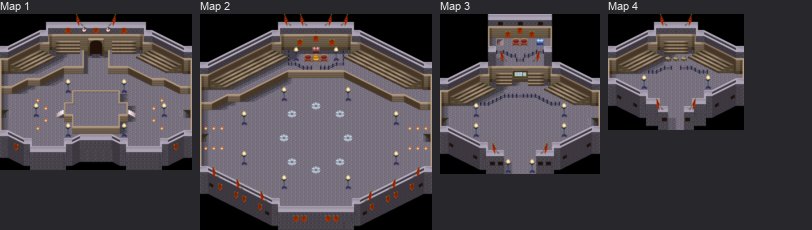
7. Forest Town#
7 default maps.
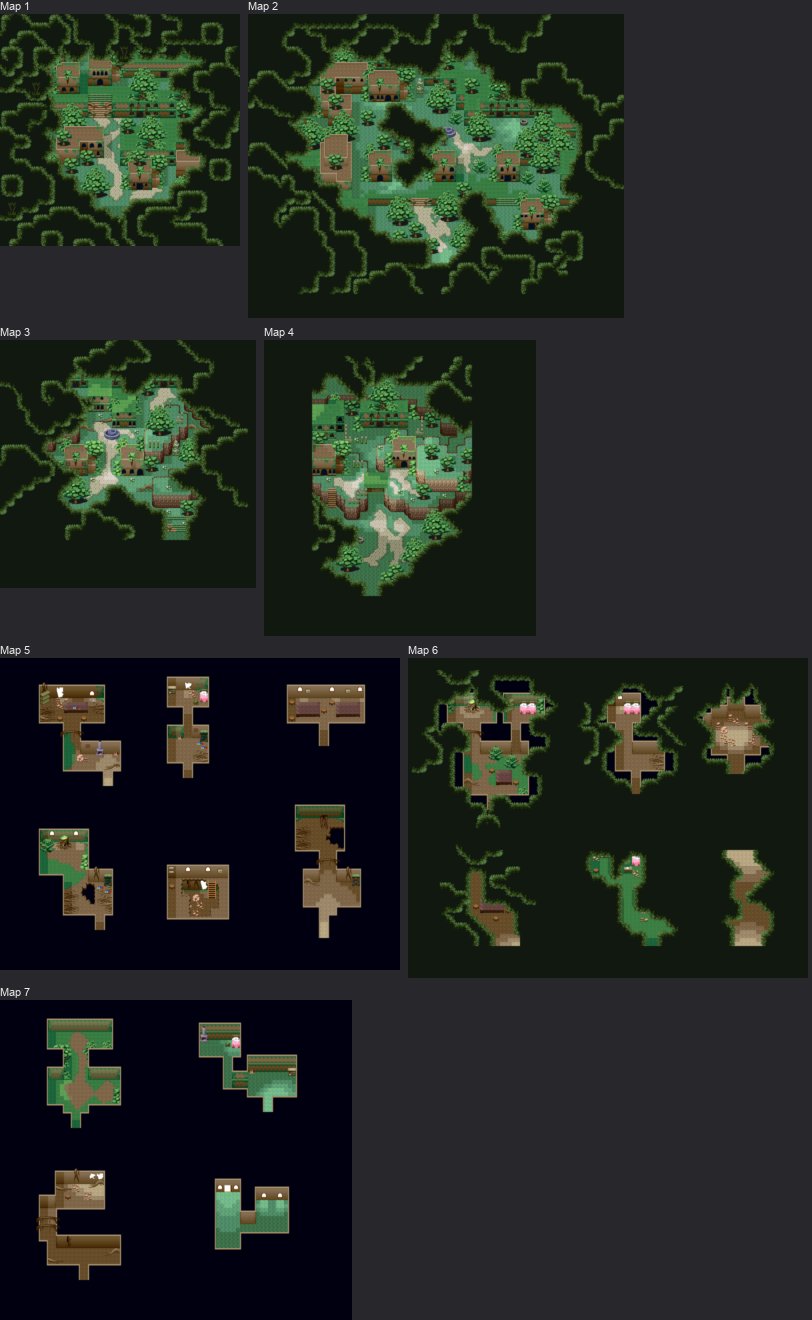
8. Ruins#
7 default maps.
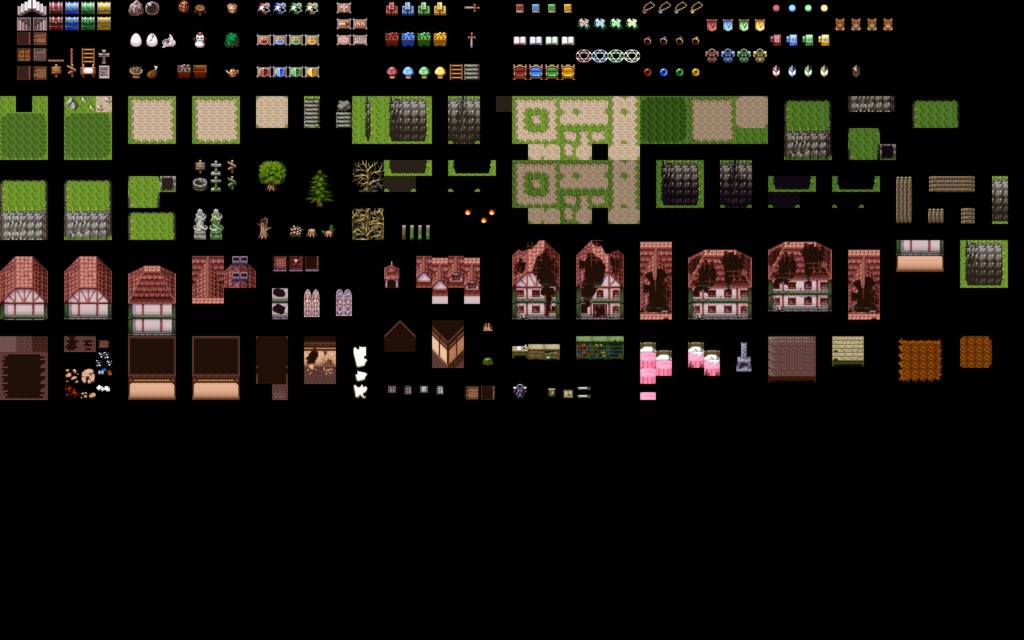
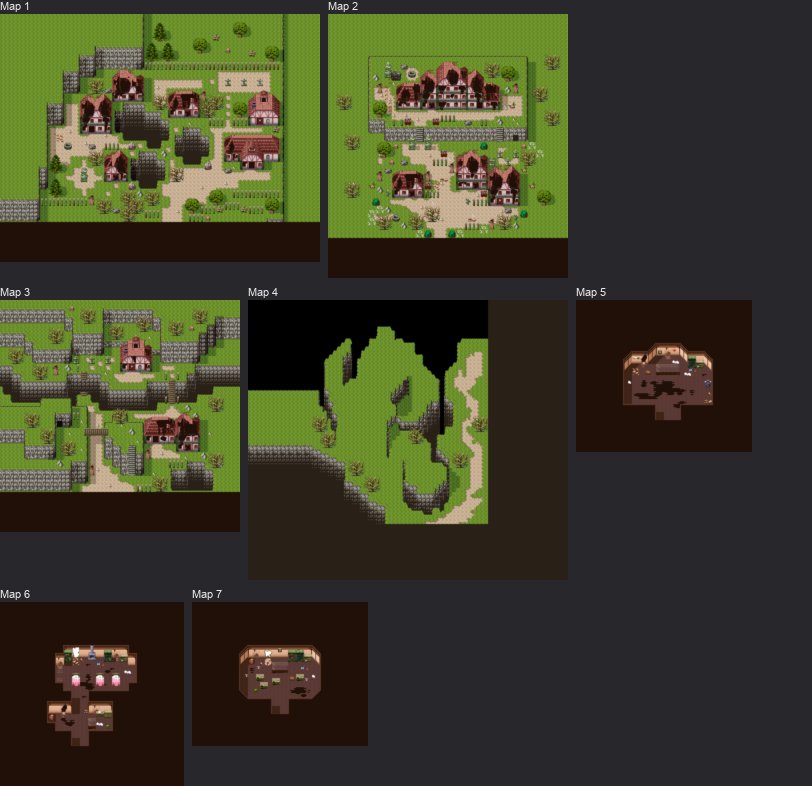
9. Mushrooms#
7 default maps.
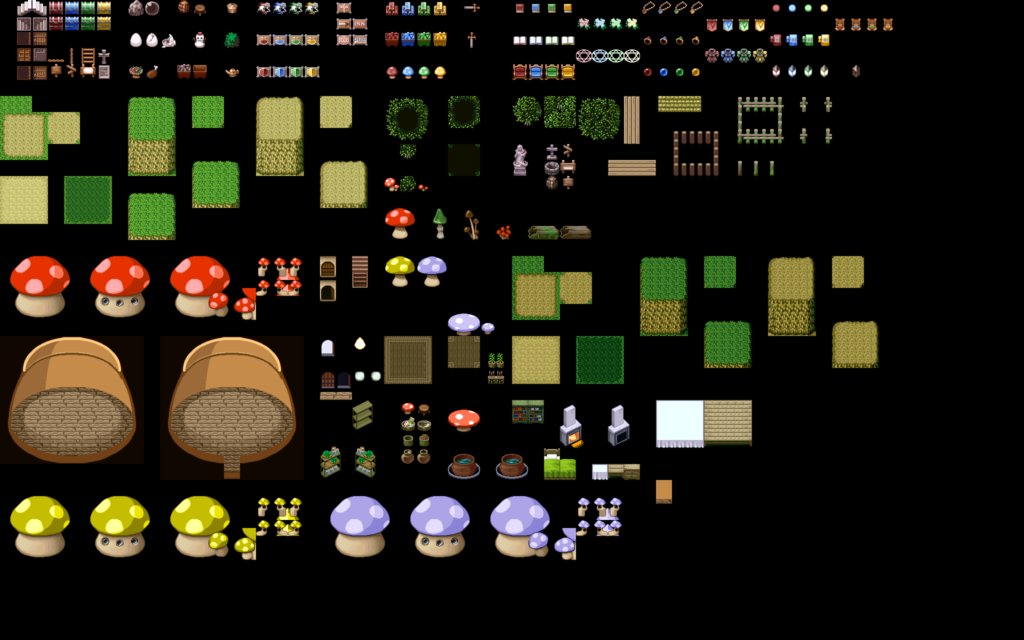
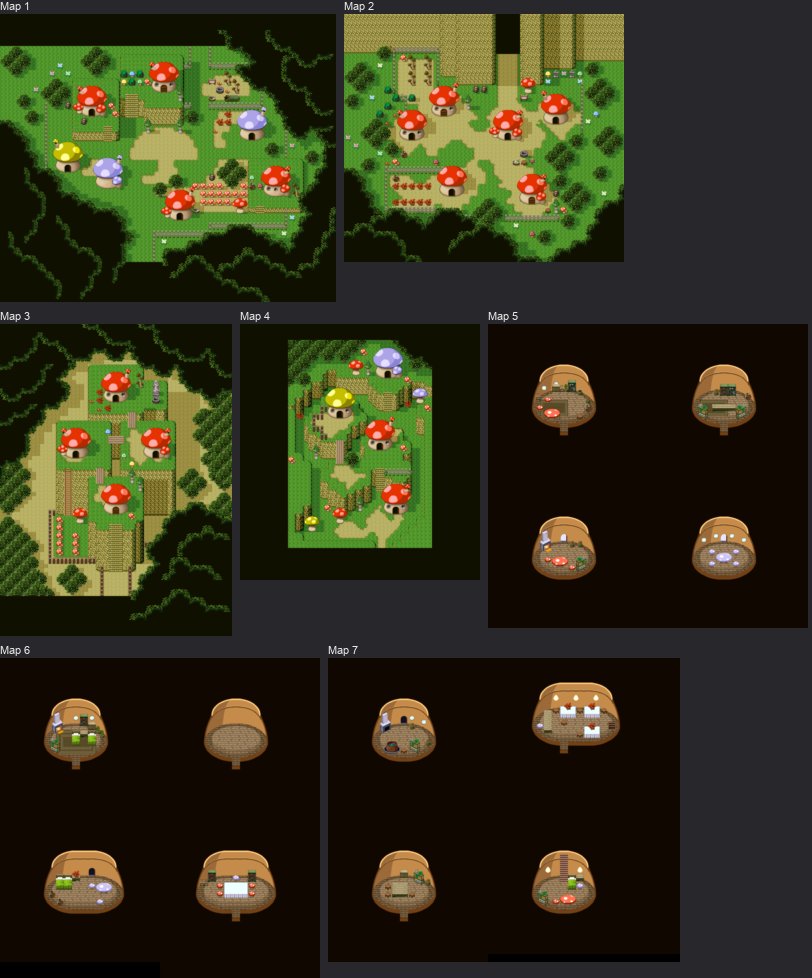
10. Candy#
8 default maps.
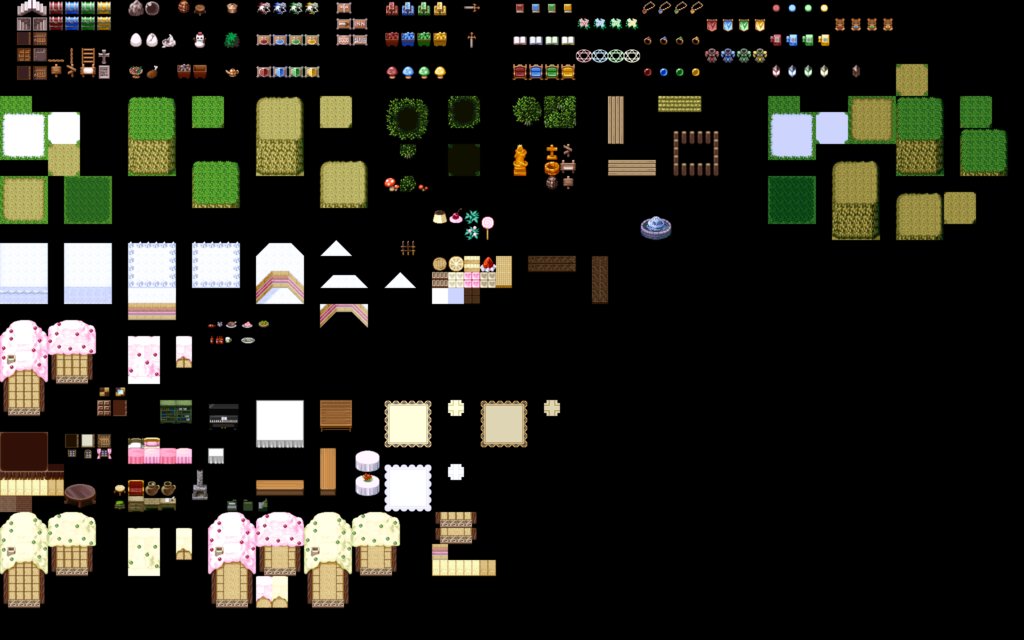
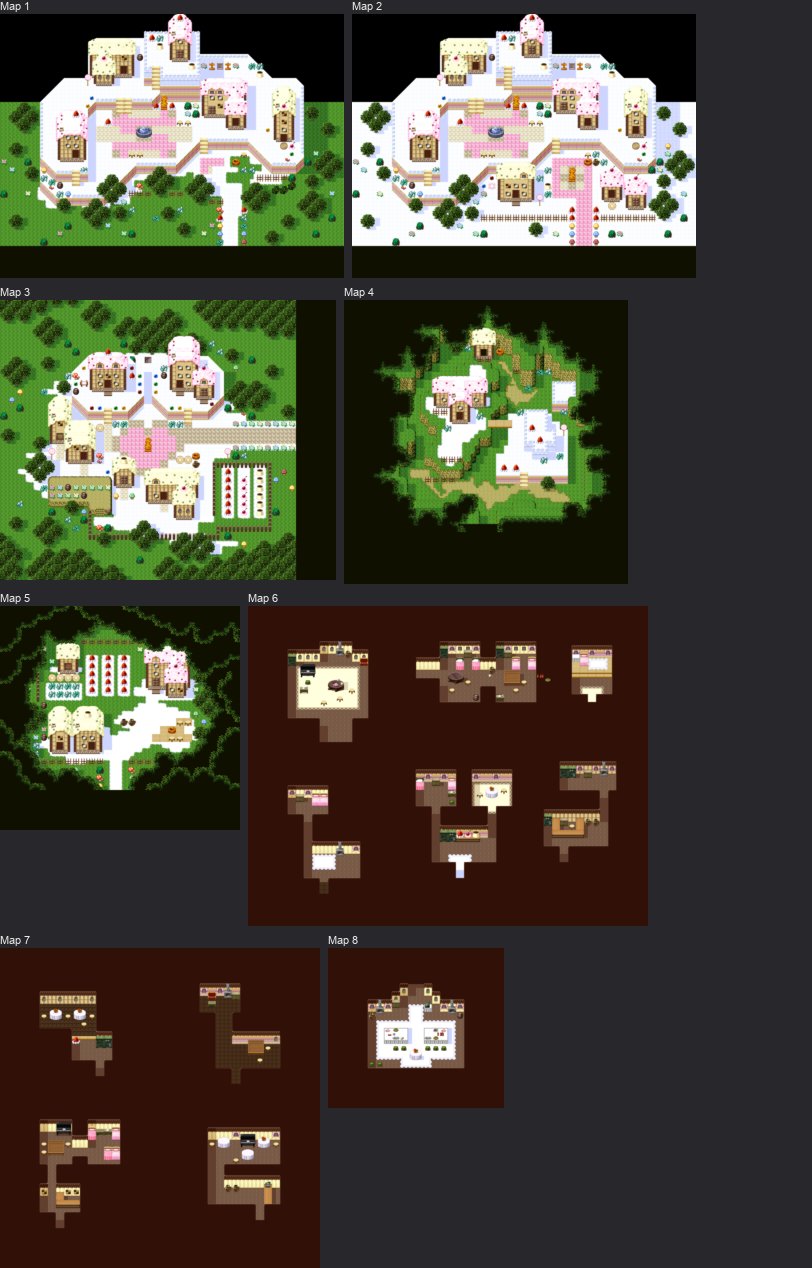
11. Above the Clouds#
6 default maps.
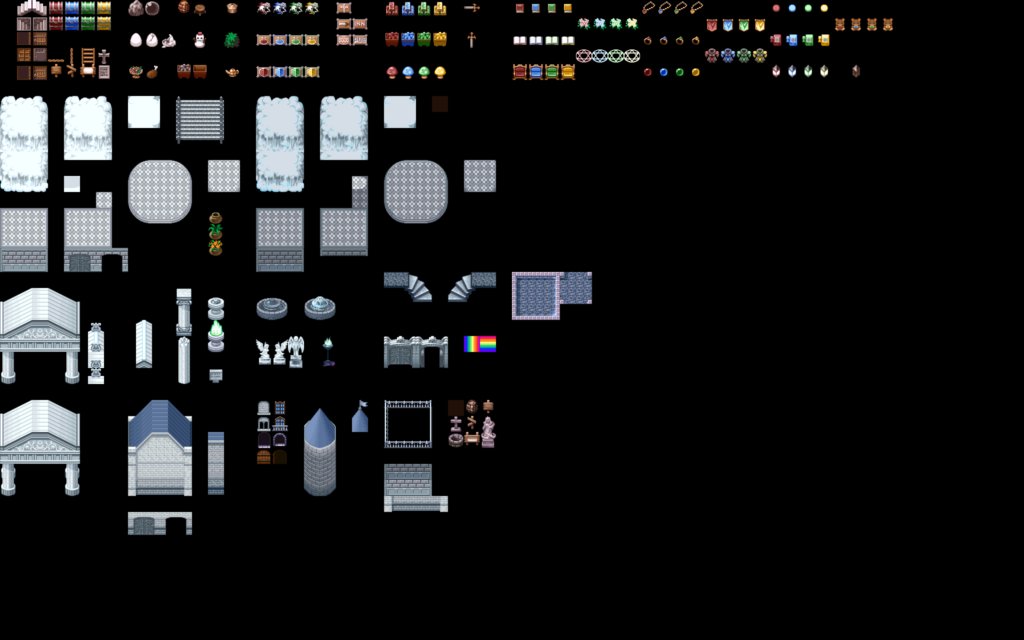
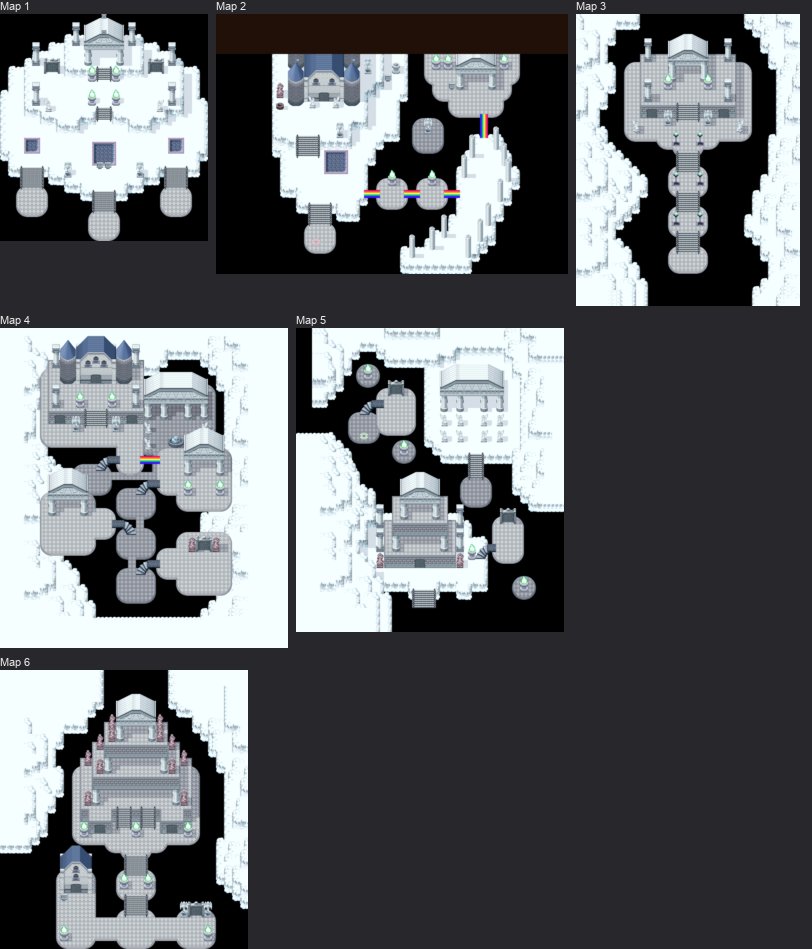
12. Tribal Village#
7 default maps.
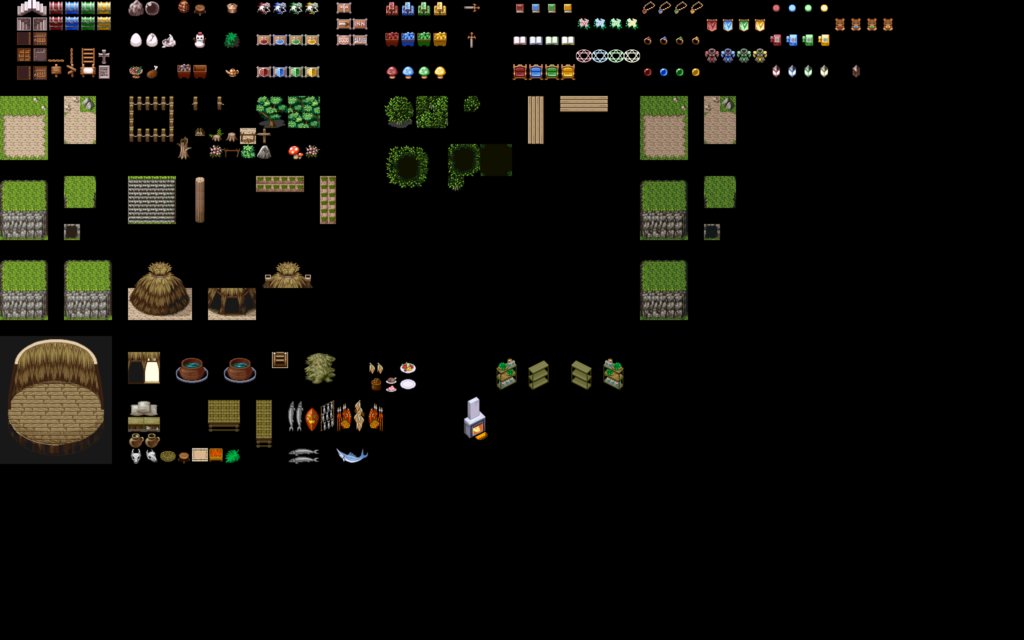
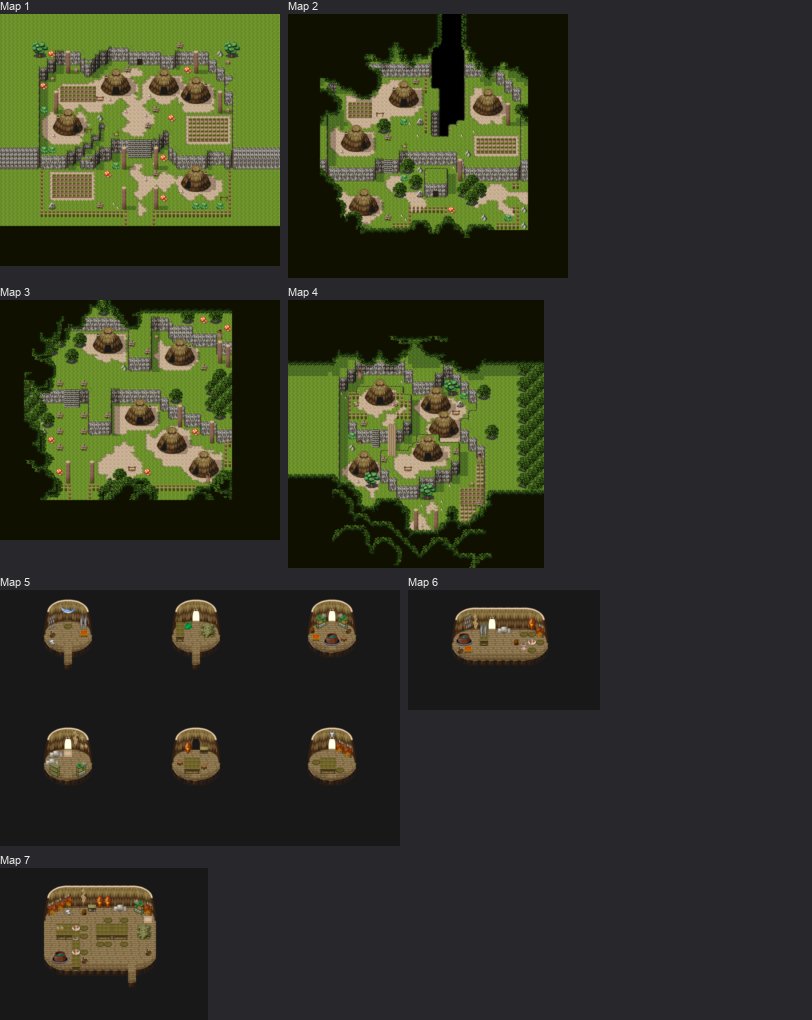
13. Church#
6 default maps.
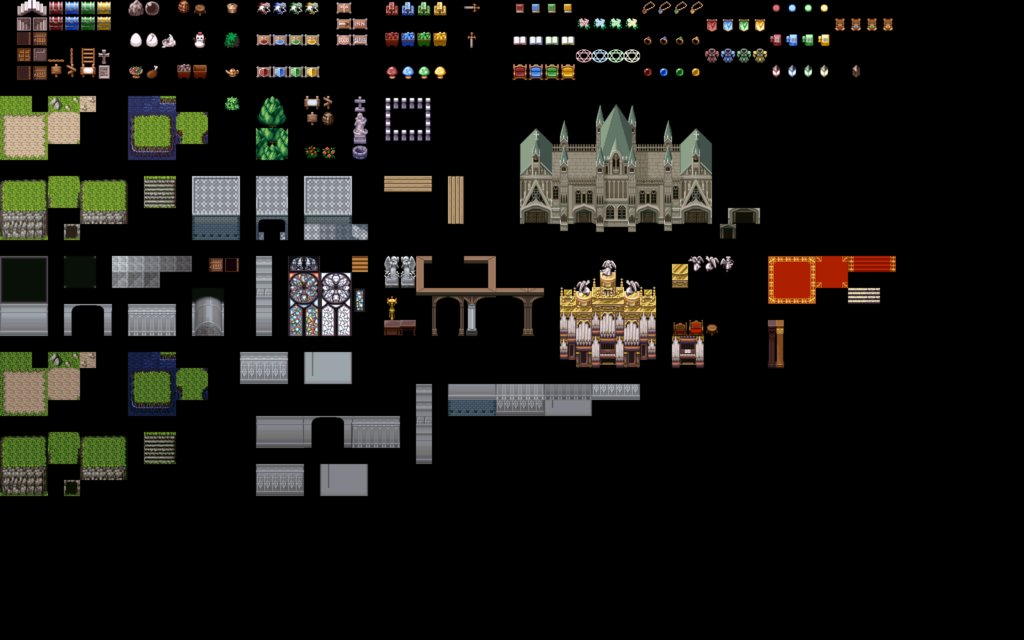
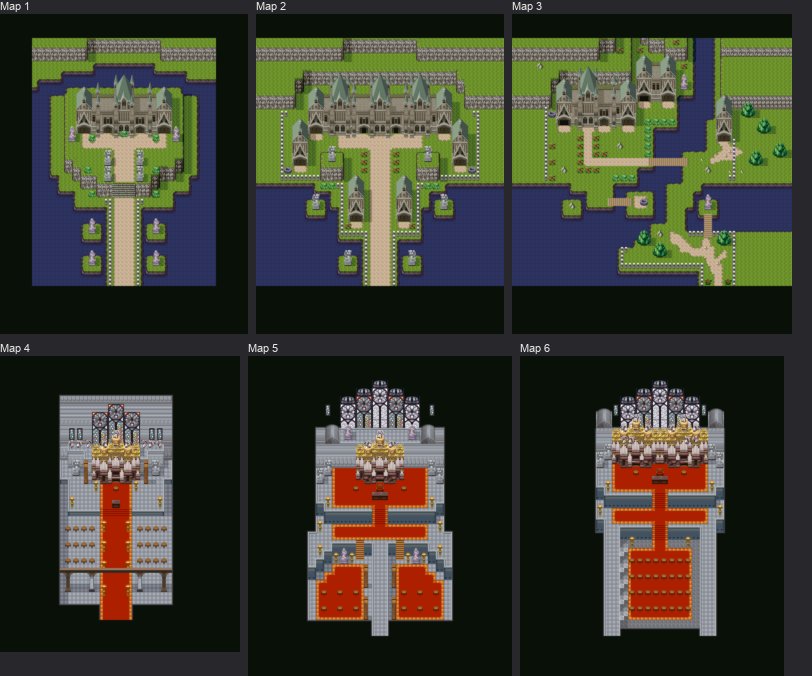
14. Wooden House#
4 default maps.
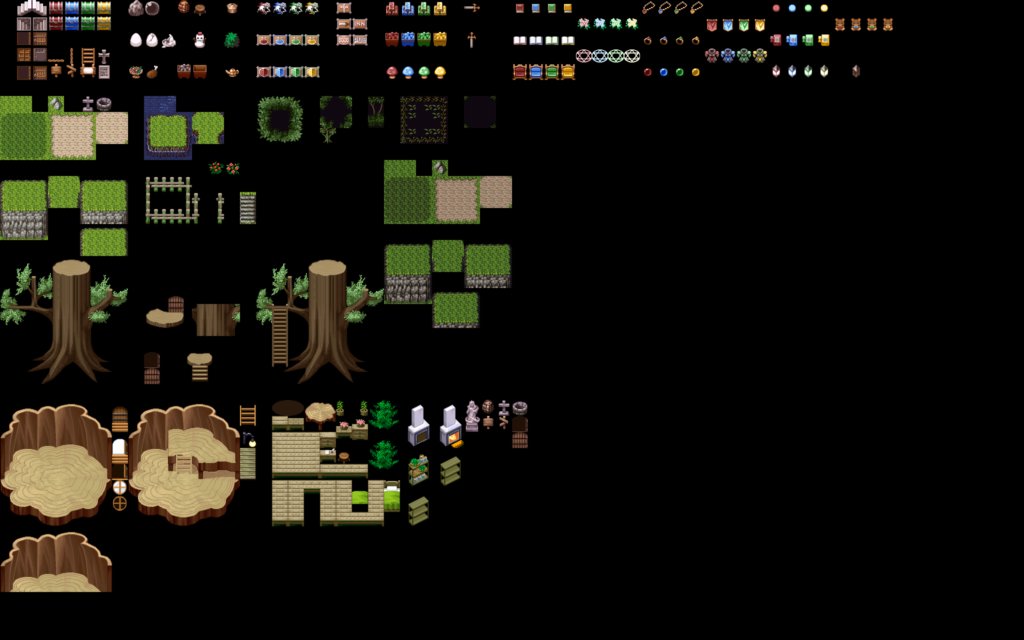
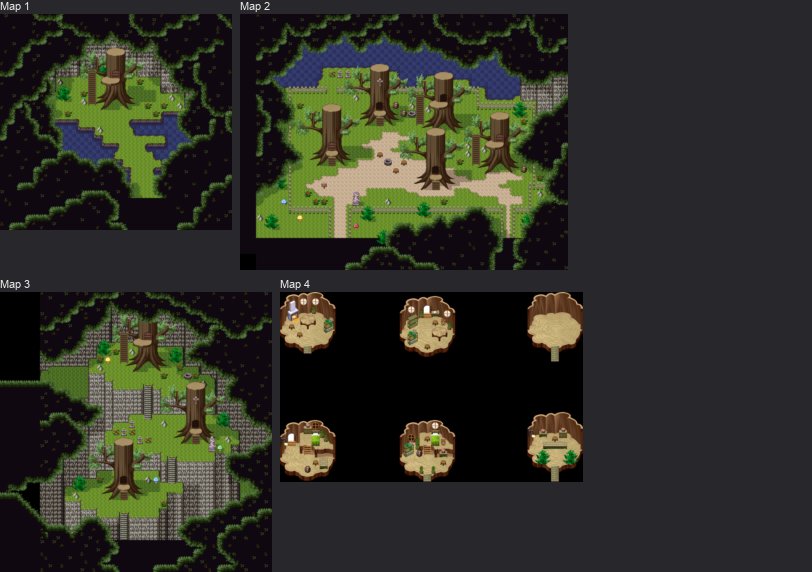
15. Theater#
4 default maps.
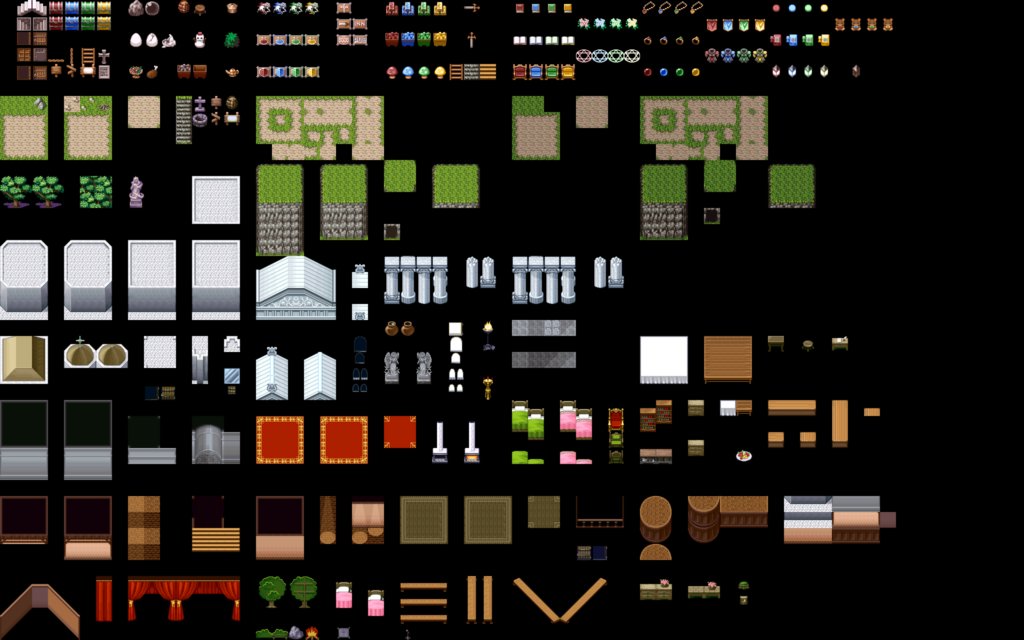
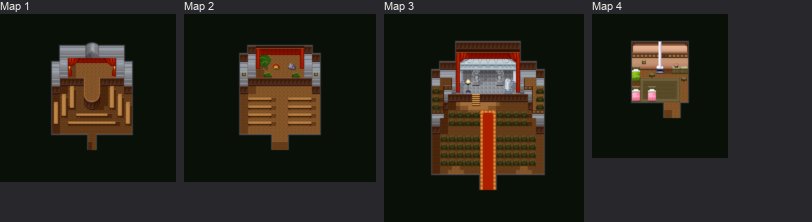
16. Floating Land#
7 default maps.
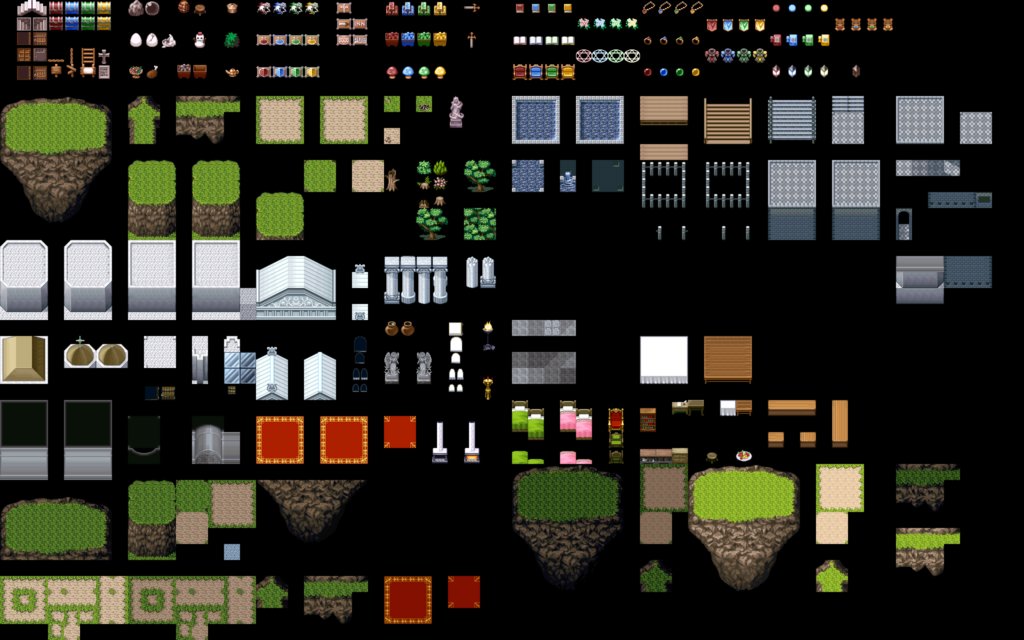
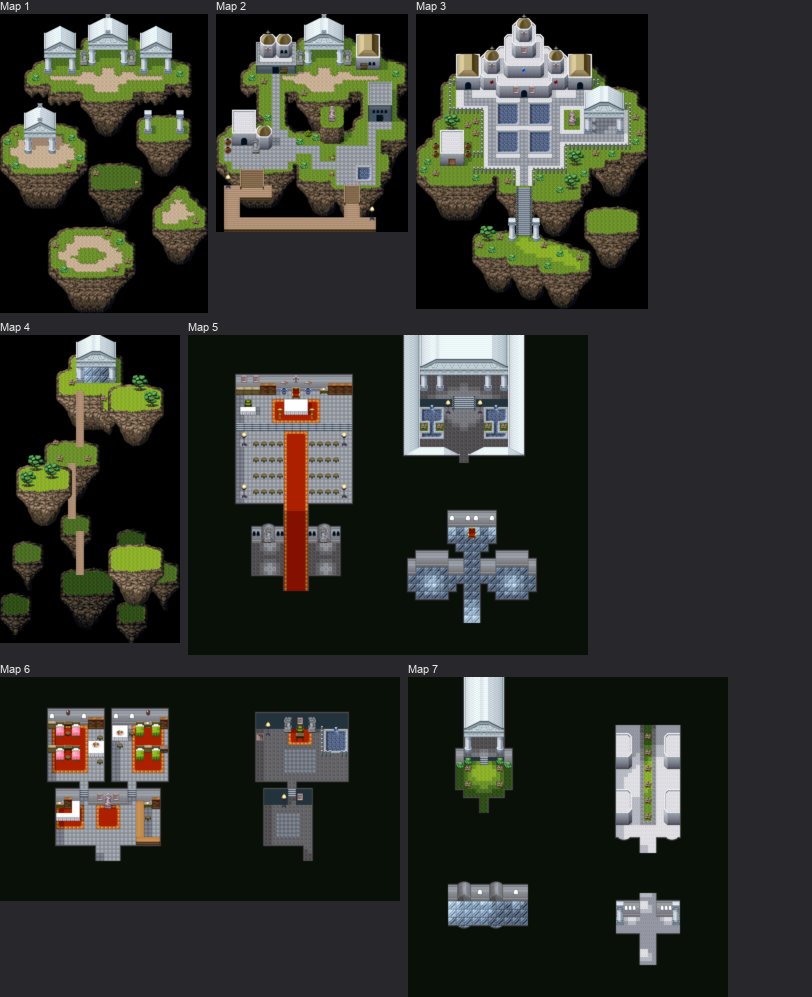
17. Cave Mouth#
6 default maps.
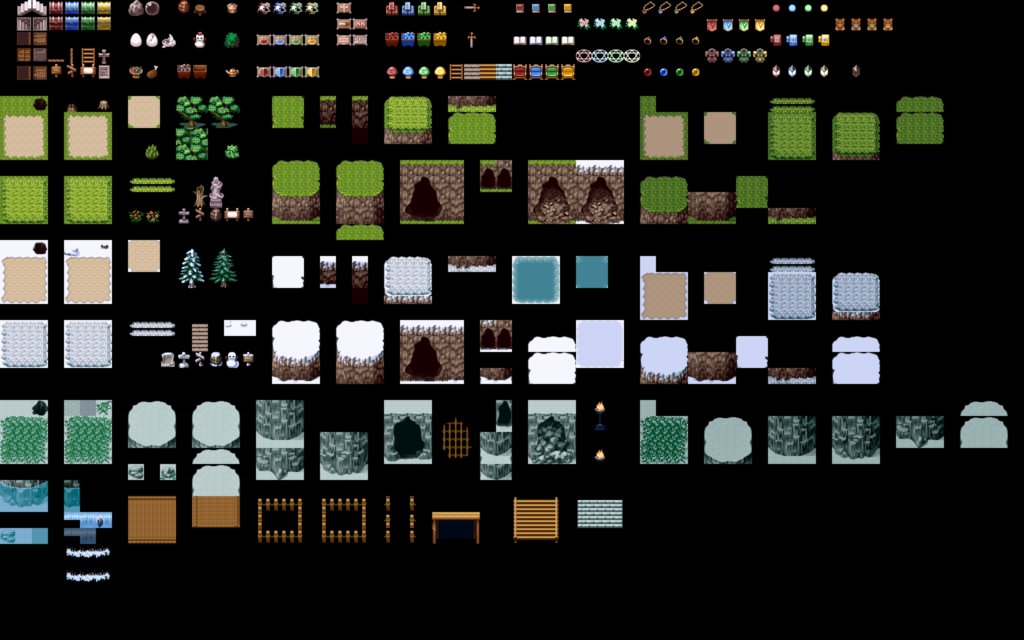
18. Limestone Cave#
7 default maps.
19. Sewer#
4 default maps.
20. Graveyard#
6 default maps.
21. Earth Cave#
7 default maps.
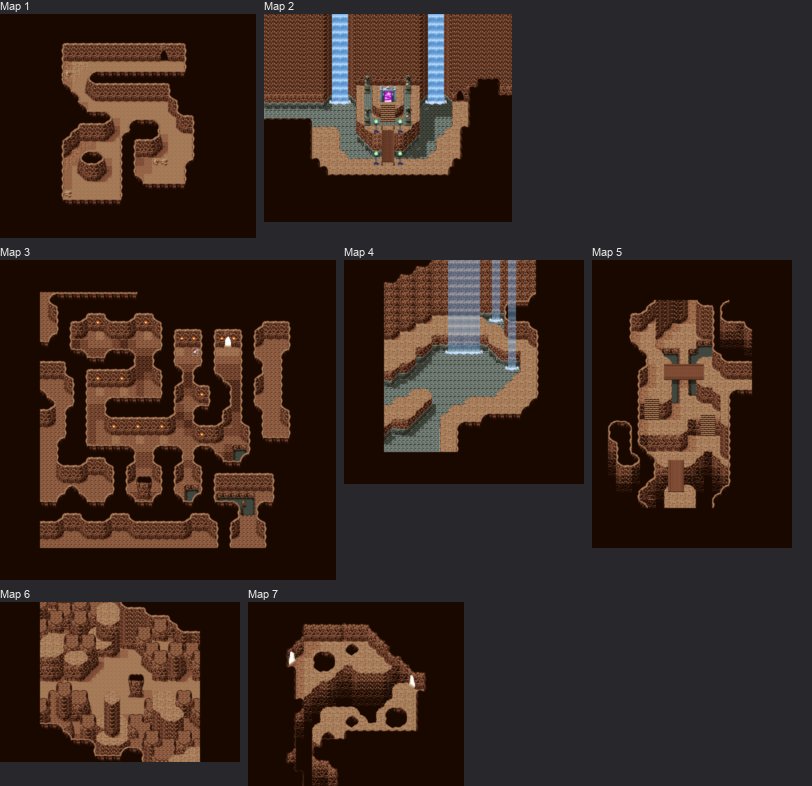
22. Rock Cave#
6 default maps.
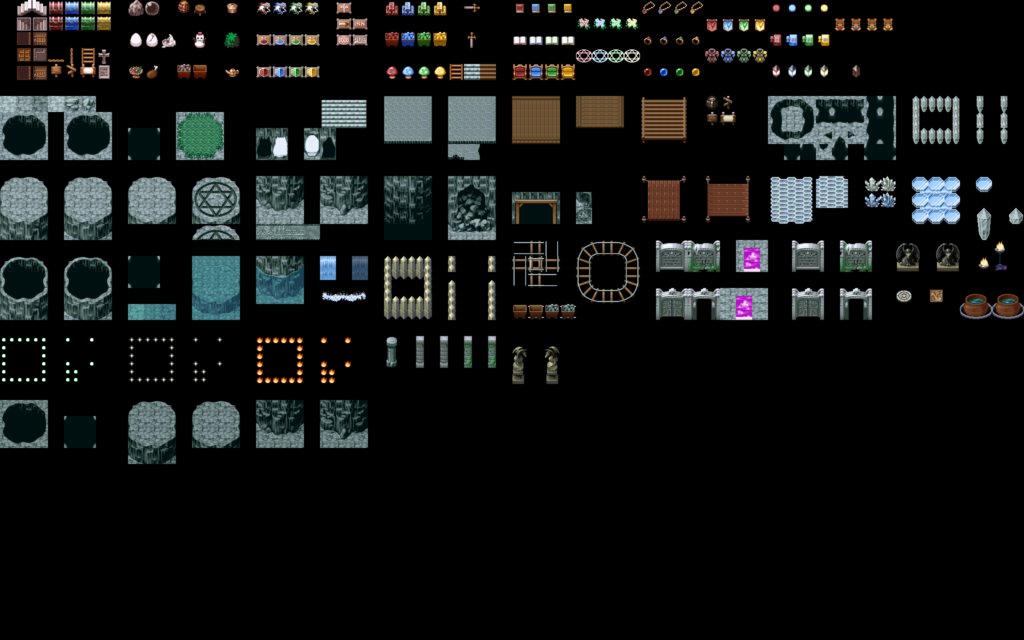
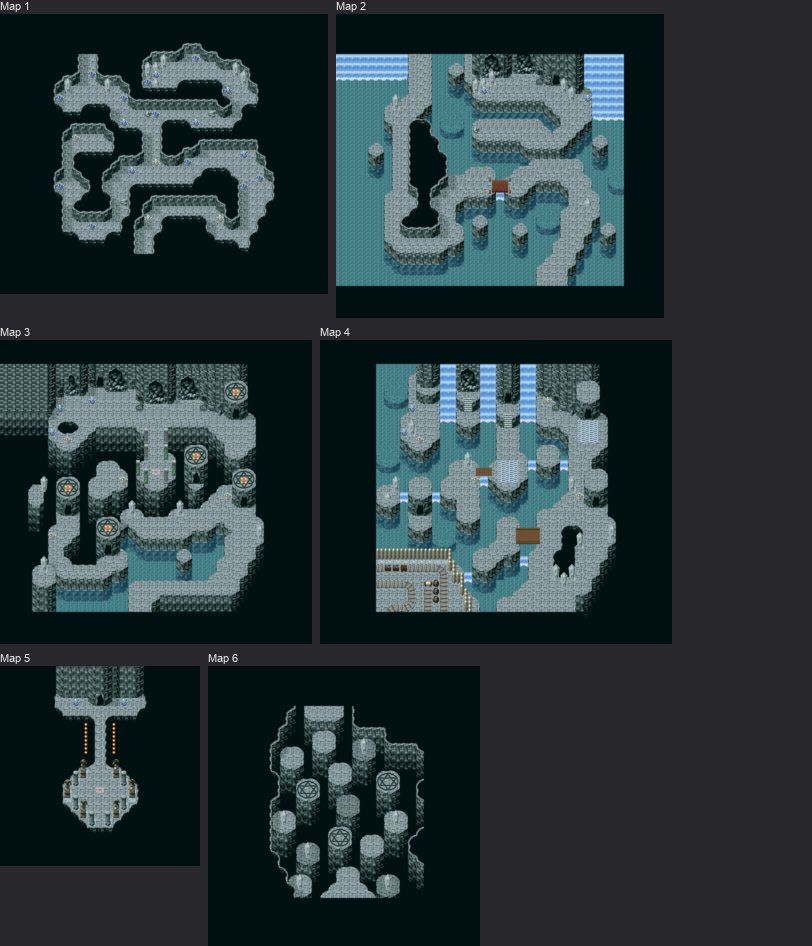
23. Fire Cave#
6 default maps.
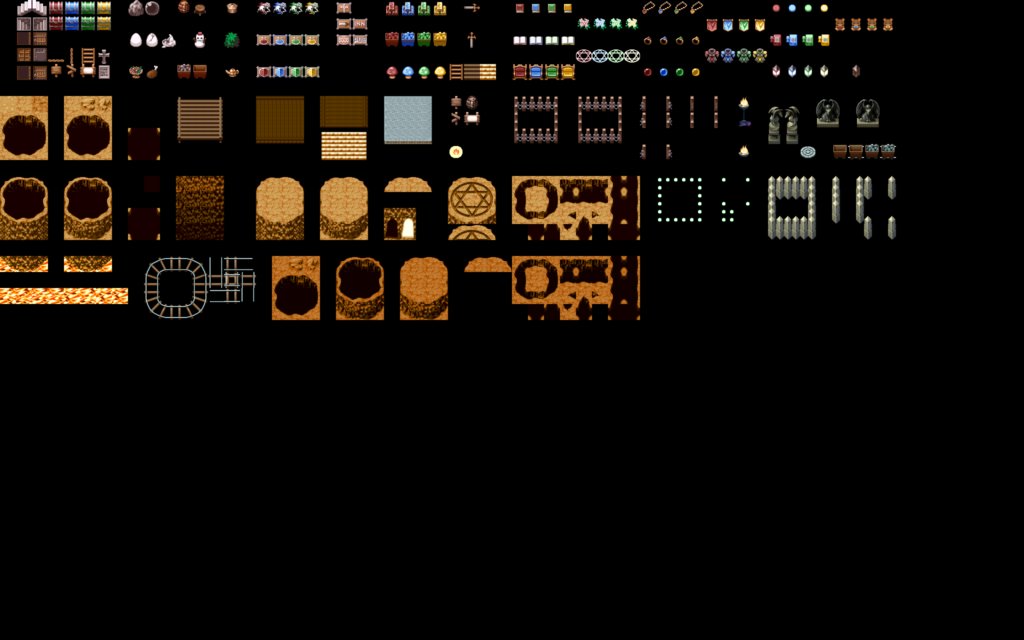
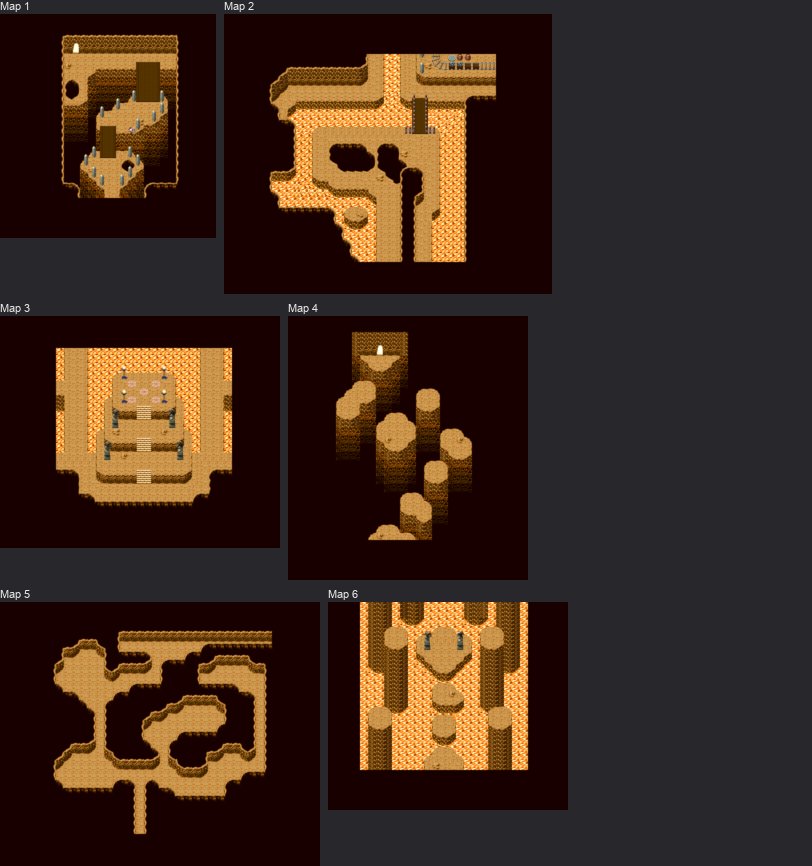
24. Ice Cave#
7 default maps.
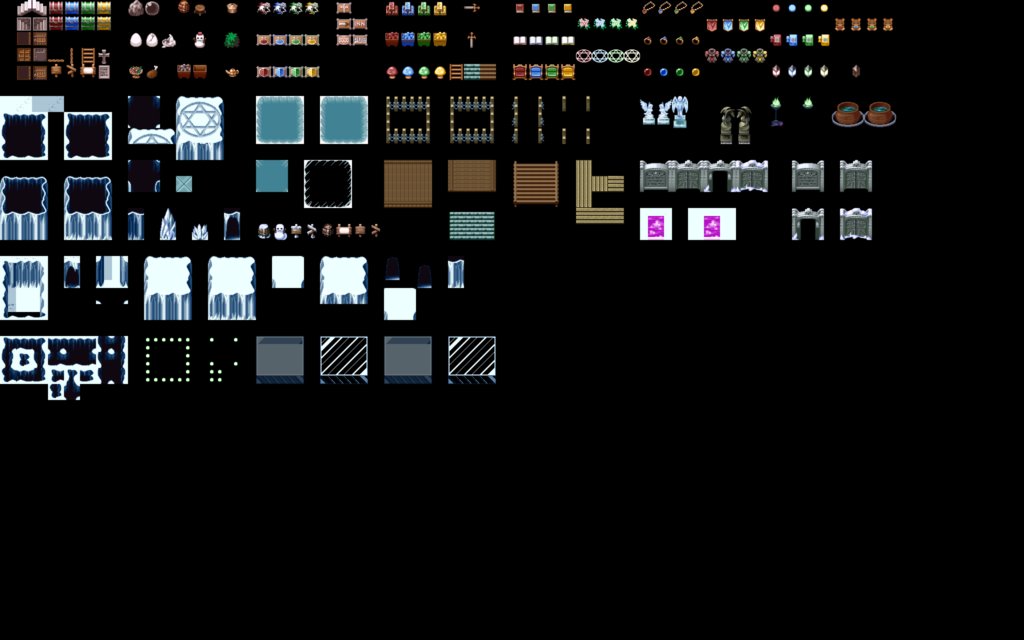
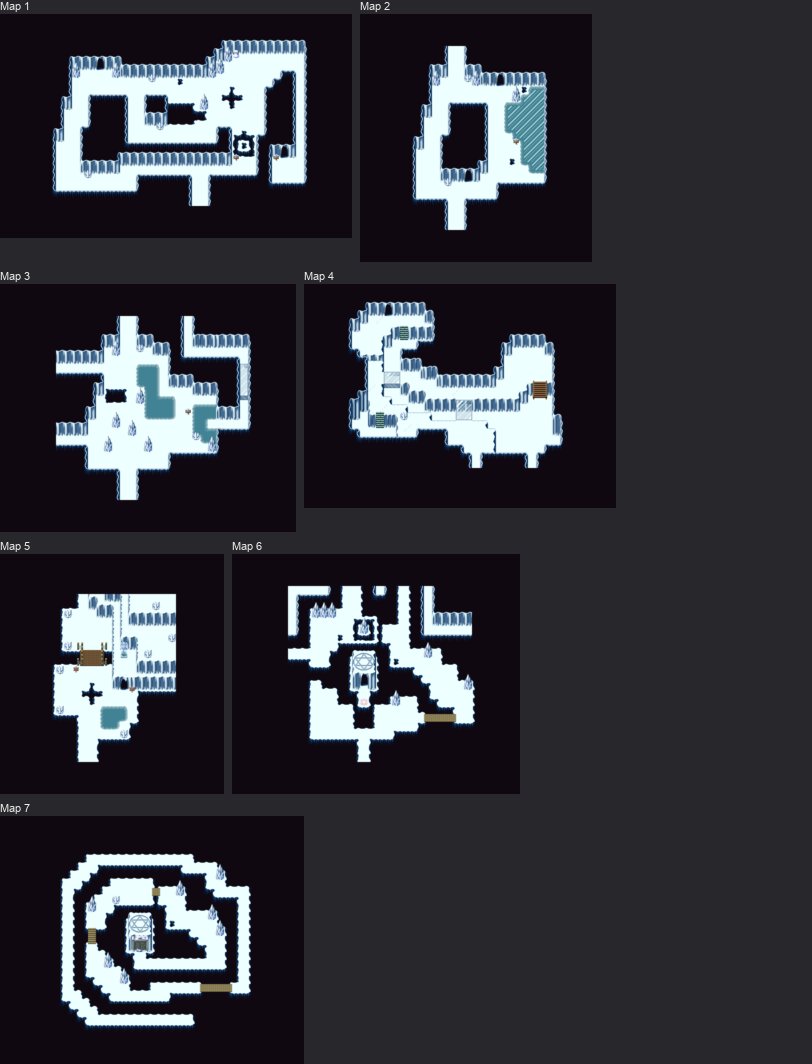
25. Dragon Cave#
8 default maps.
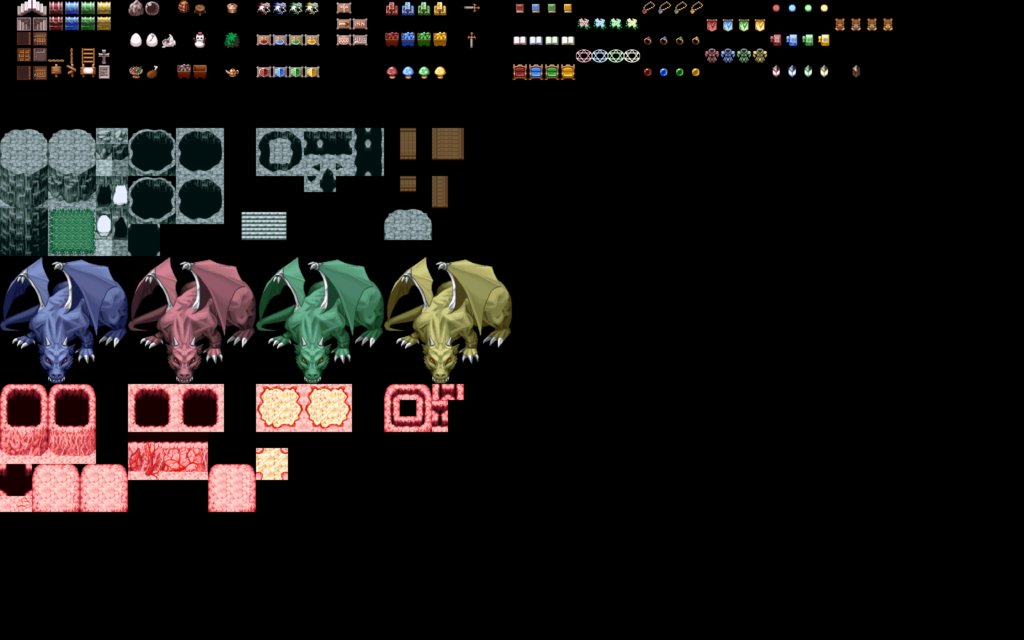
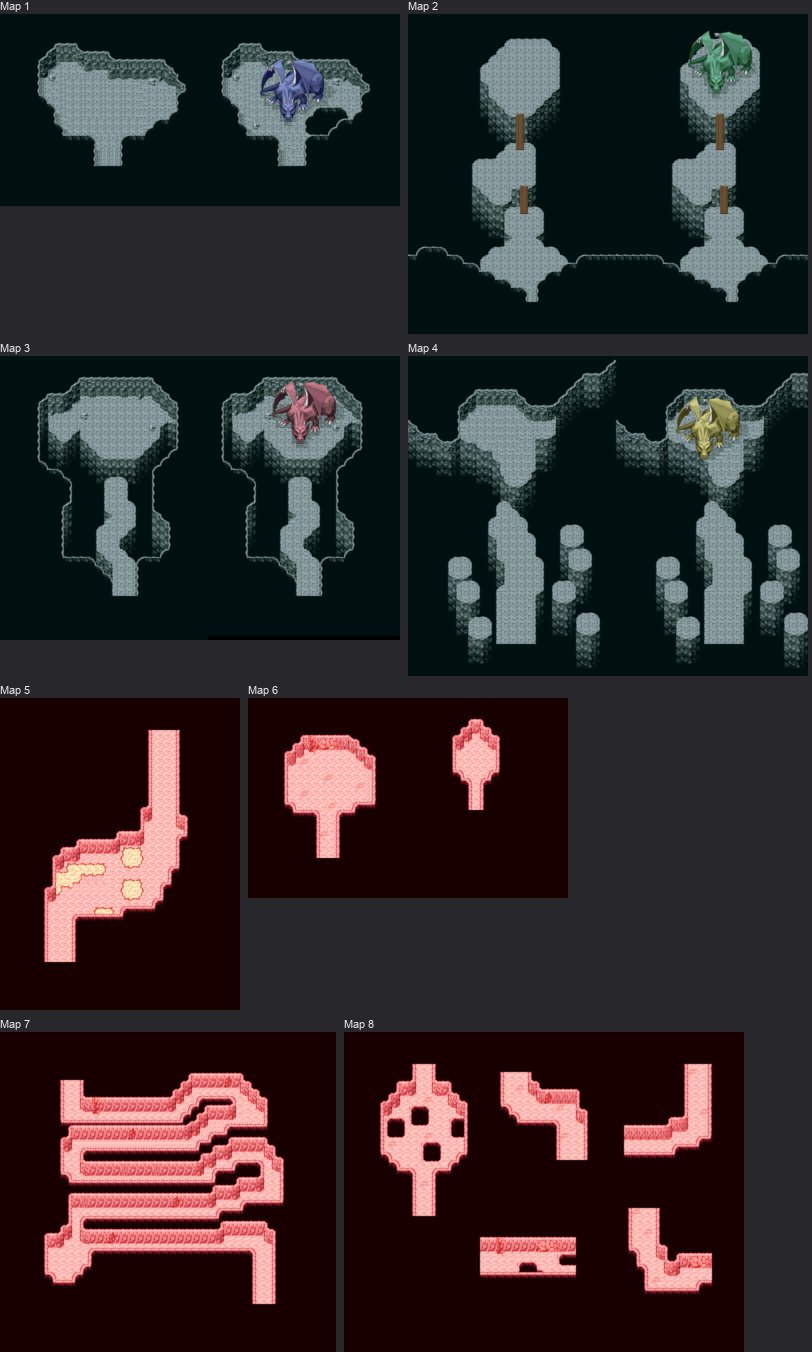
26. Treasure Cave#
6 default maps.
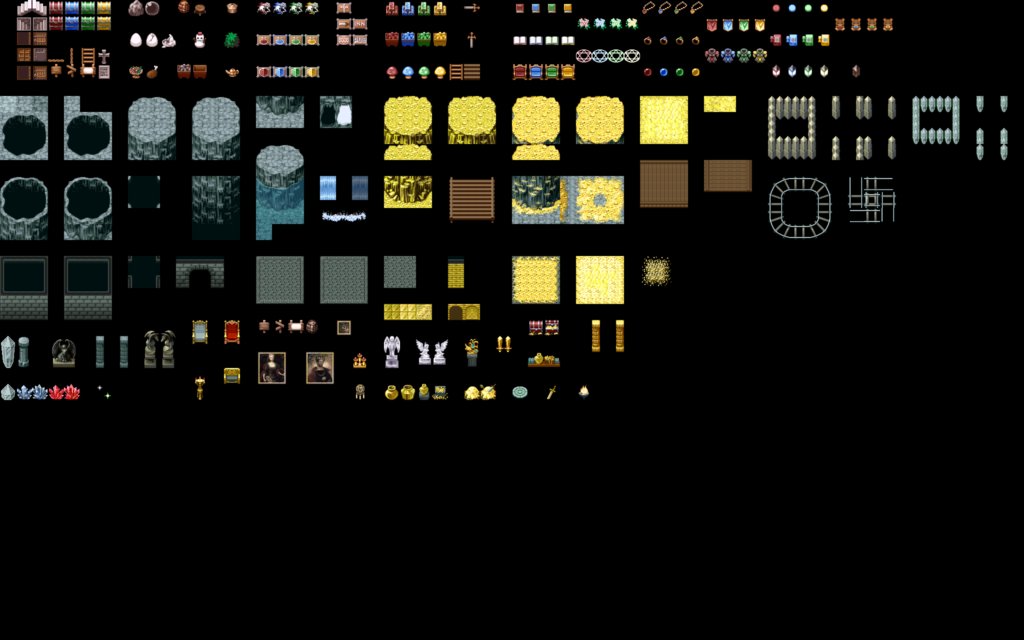
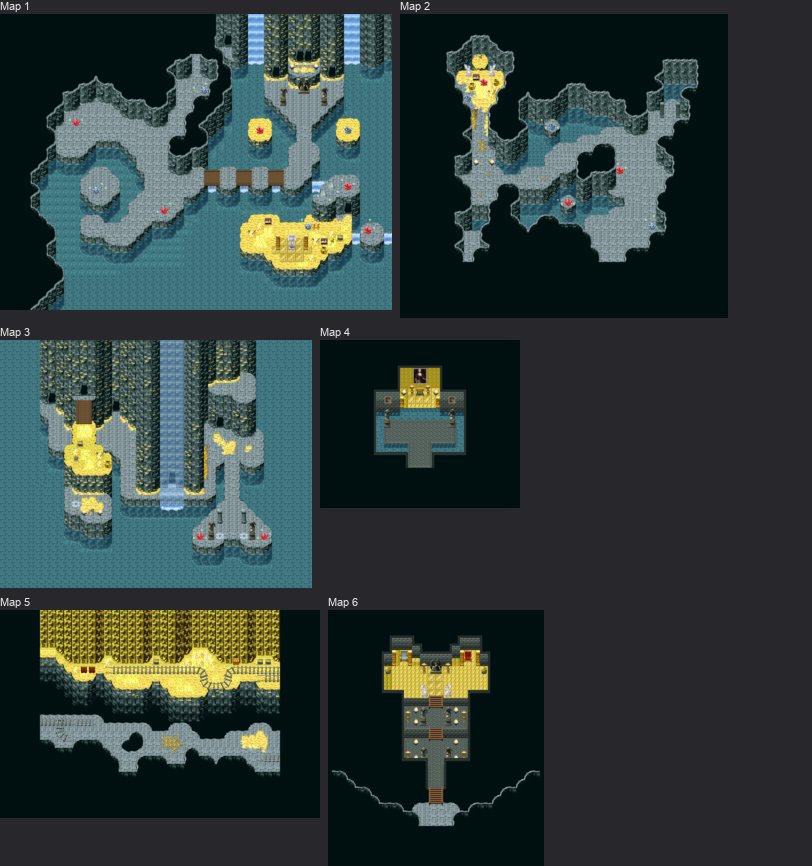
27. Dark Forest#
9 default maps.
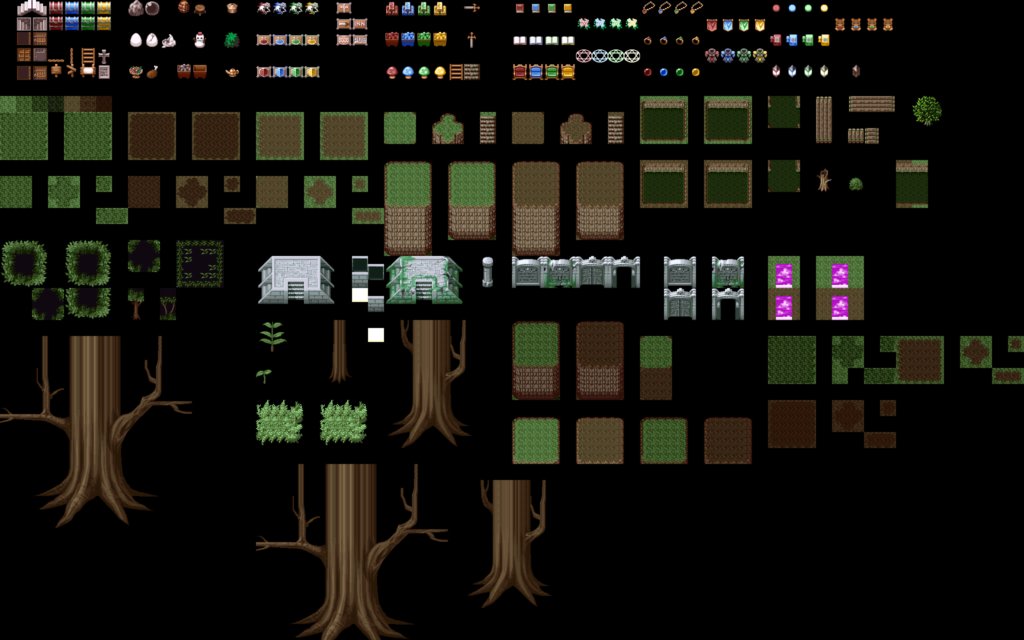
28. Bright Forest#
9 default maps.
29. Snow Forest#
4 default maps.
30. Pyramid#
7 default maps.
31. Tower#
8 default maps.
32. Ship#
6 default maps.
33. Edo#
7 default maps.
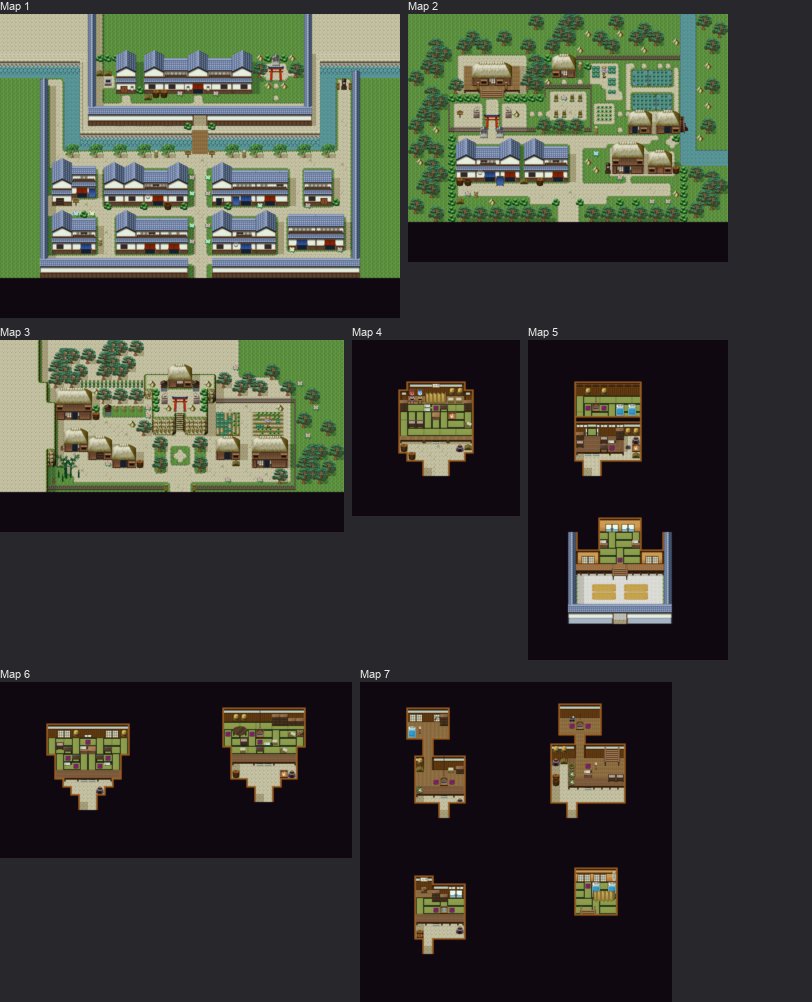
34. School#
6 default maps.
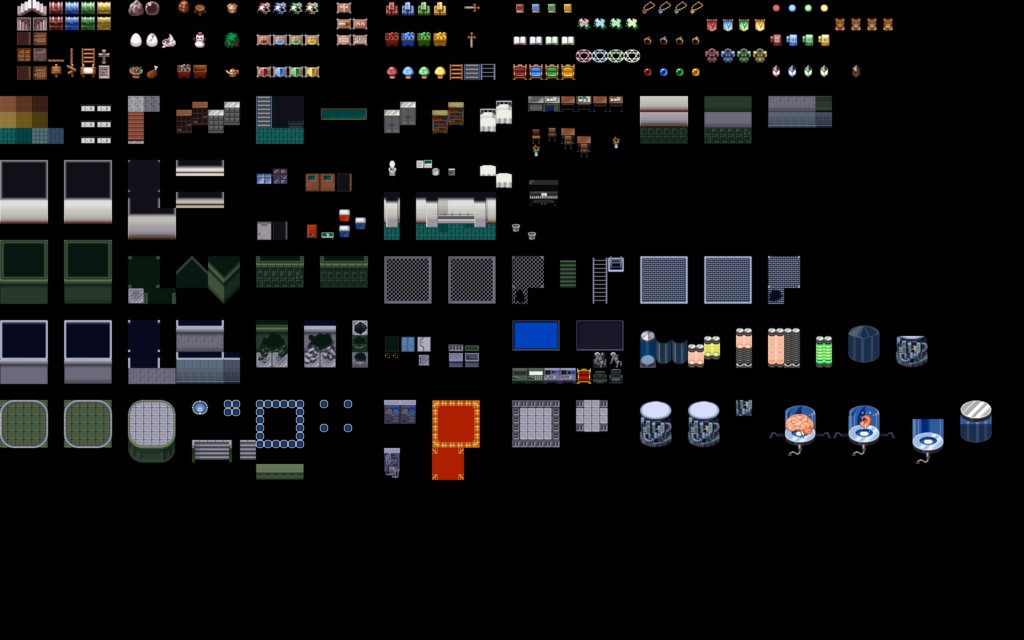
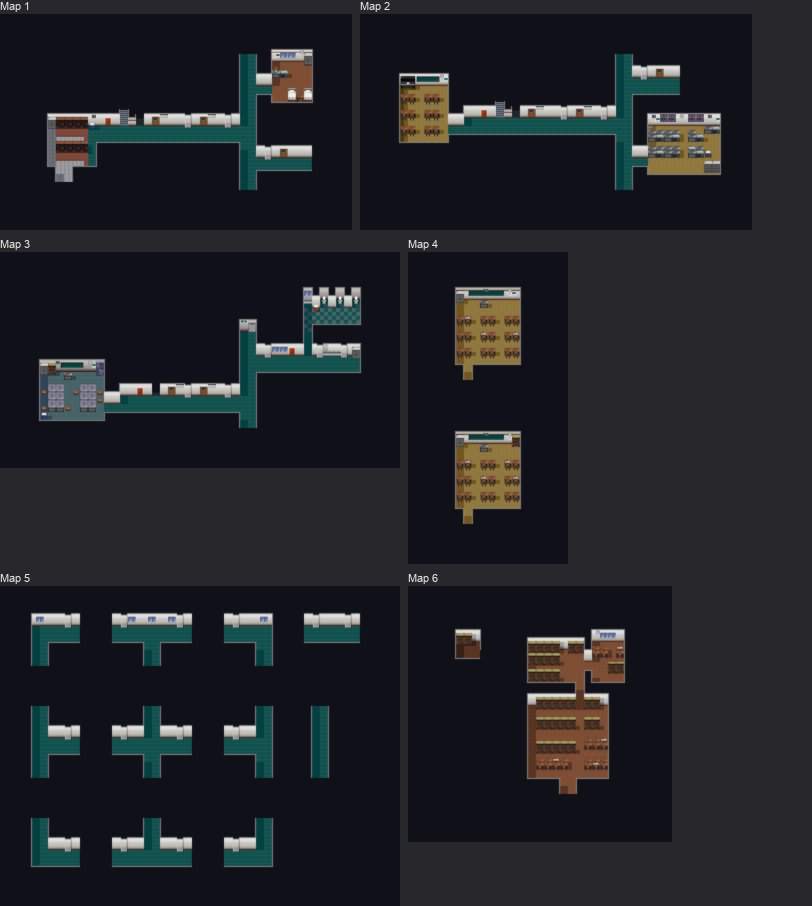
35. Sci-Fi#
6 default maps.
36. Wild West#
6 default maps.
37. Mansion#
7 default maps.
38. Clock Tower#
4 default maps.
39. Outer Space#
6 default maps.
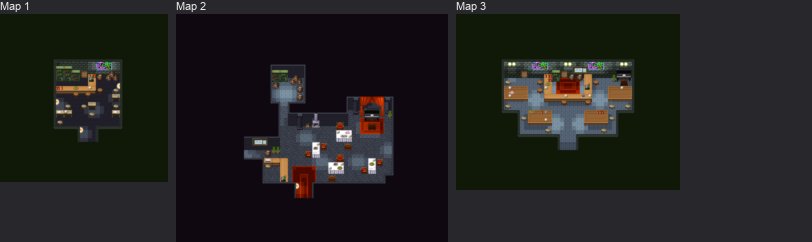
40. Casino#
3 default maps.
41. Tavern#
3 default maps.
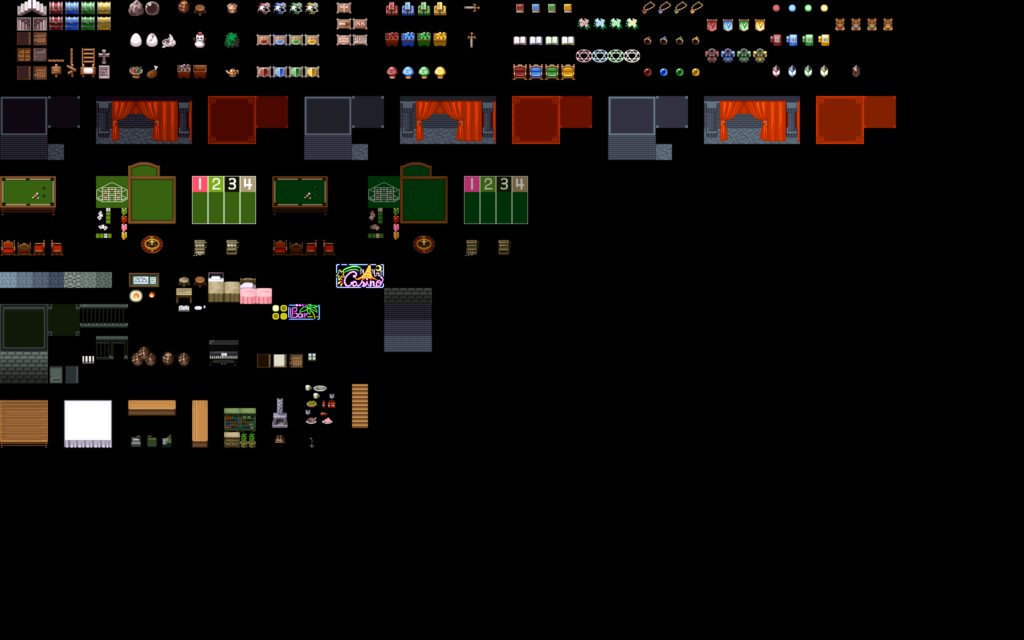
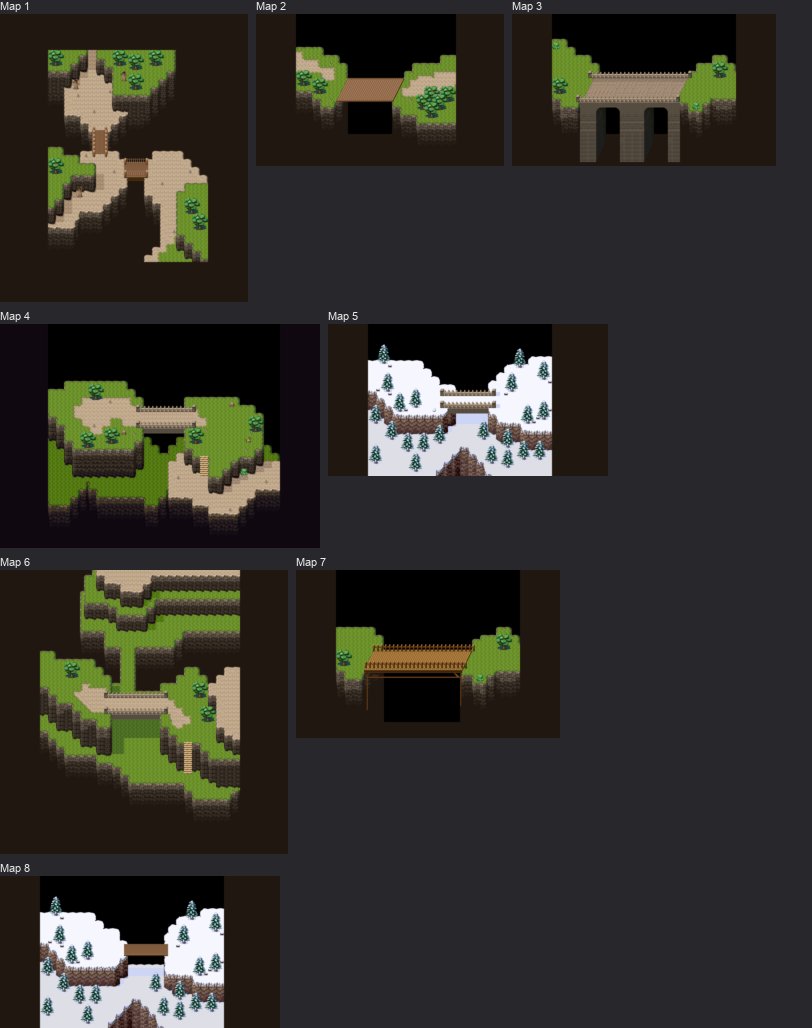
42. Bridge#
8 default maps.
The field set#
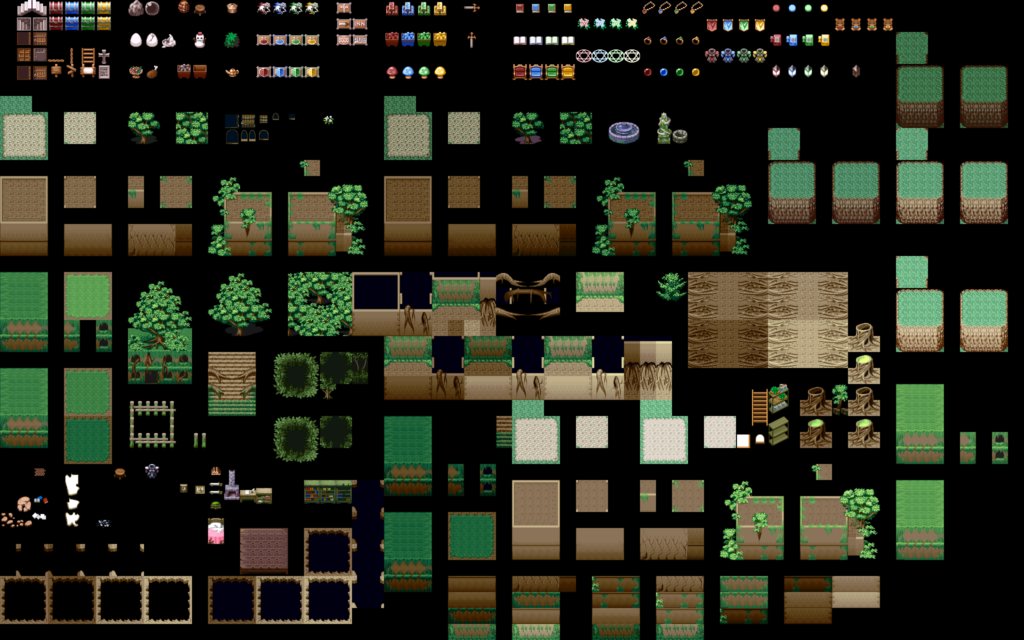
Field maps, the world maps that wrap round at their edges, have a set of their own, not one of the 43, and no default maps. The book prints its parts sheet last (Guidebook pp. 202–203).
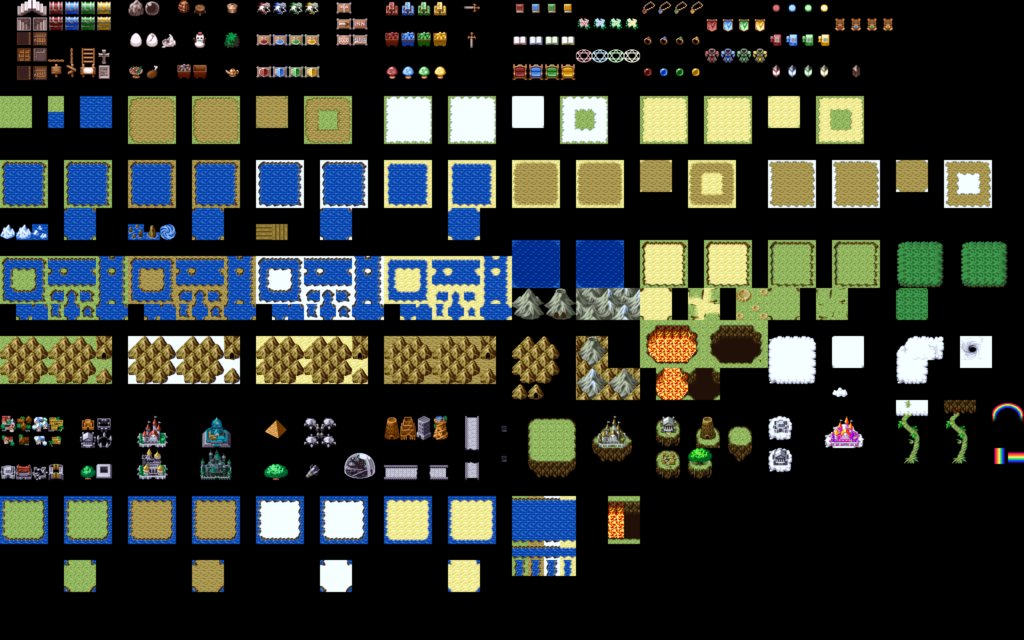
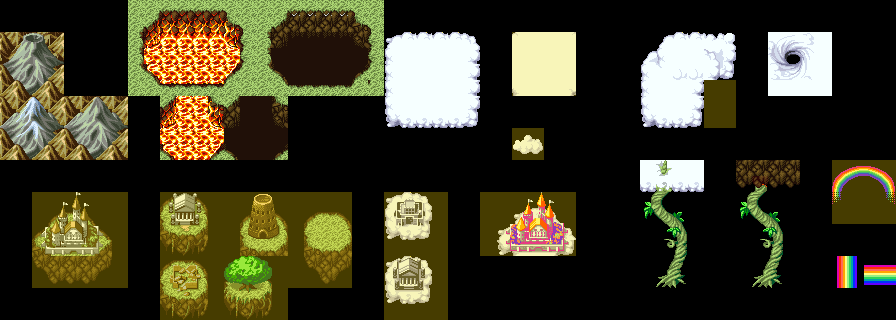
It shares the common rows with the other sets, then has its own: the ground as terrain blocks (sea, grass, desert, snow, mountains, lava and others; 21 blocks of 3 × 3 cells and two of 2 × 2), and 27 larger pieces stamped whole, among them the castles, towns and towers that mark the places a party can visit.
The ground behaves a little differently on a field map:
- The sea is the field's water. It stops a walker, and it is the only ground a ship can sail on. The invisible part 0278 is invisible sea here.
- No footprints, no hiding in bushes and no reflections. No part of the field set has those effects, so the party never leaves tracks on a field map, even in its snow and sand.
- The sky parts: the clouds, a rainbow and the floating islands at the lower right. Most of them are overlay parts, so painted over the sea they are open water to a ship, which sails under them and is drawn behind them; a walker can't step onto them from the sea. Where one is the ground itself (the middle of the big cloud is a base part), a walker can stand on it and a ship can't enter it. An aircraft is never stopped by them and never passes behind them.
Fan-made reference material, one of the Eschaton Games Tsukuru guides. Not affiliated with the publishers of the titles it covers.